

In my 20 years of experience in education and school leadership, I have learned an important lesson: before correcting a child’s behavior, try to understand the reason behind it.
As teachers, we often react to what we see. But have we ever stopped to understand what the child is experiencing?
Ask yourself one simple question:
“Have I understood why this child is behaving this way?”
Did you look beyond the behavior?
Imagine a student who repeatedly fails to complete classwork or homework. You may think he is lazy or careless.
You should not scold him, you can ask:
You: “Rahul, why haven’t you completed your work?”
Rahul: “Ma’am, I don’t understand the questions. I am afraid you will scold me if I ask again.”
Suddenly, the situation looks different. The child may be willing to learn; he may simply need help and encouragement.
One thoughtful question can uncover insights that anger may never reveal.
This is why you need to look beyond what you observe. A child’s behavior is visible, but the reason behind it may not be immediately obvious. Some children struggle academically, some feel ignored, and others find it difficult to express their emotions.
When you understand the possible reason, you can choose a more effective response.
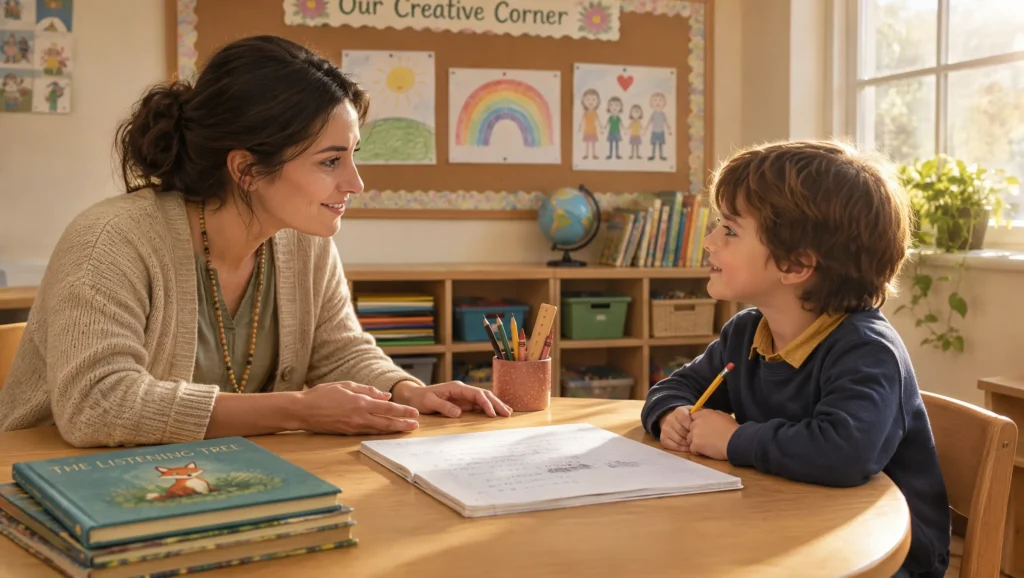
What Has My Experience Taught Me?
A child who avoids reading may fear making mistakes. A student who talks too much may be seeking attention. Another child who appears careless may find it difficult to understand the lesson.
One thing is that children require adequate correction, continuous direction, and well-defined boundaries. But rather than making them feel guilty, wounded, or demoralized, your objective should be to help them realize their mistakes and make improvements.
In the classroom, the same behavior can have different causes. A child who refuses to write may not understand the task. A student who frequently interrupts may find it difficult to wait for a turn. Another who never answers questions may know the answer but lack the confidence to speak up.
The important lesson is this: You do not label a child before understanding the situation.
You should not say, “You are lazy,” but you can say, “I have noticed that you have not completed your work. Is there something making it difficult for you?”
The first statement attacks the child’s character. The second identifies the problem and opens the door to a solution.

Practical Tips: How Can You Understand a Child Before Correcting Them?
Here are some simple strategies you can use in your classroom every day.
1. Think Before You Correct
When a student makes a mistake or behaves badly, avoid correcting them immediately in anger. You take a breath, lower your voice, and consider what might have happened.
For example, if a student enters the classroom late, ask about the reason before deciding on the suitable consequence. You can maintain punctuality expectations while listening to the child’s explanation.
2. Ask Questions Instead of Making Accusations
You should replace statements such as “Why are you always careless?” with “I noticed that you missed some questions. Can you tell me what happened?”
Open-ended questions encourage children to explain their difficulties. Listen without interrupting, and avoid assuming that every explanation is an excuse.
3. Correct Privately Whenever Possible
Public criticism can embarrass children and make them defensive. If a student is disturbing the class, approach them calmly and speak privately when possible.
For instance, you might say, “I need you to listen while others are speaking. Is something distracting you today?”
This communicates your expectation without unnecessarily humiliating the child.
4. Identify the Support the Child Needs
Sometimes children need additional explanation, more practice, simpler instruction, or encouragement to participate.
If a student repeatedly makes spelling mistakes, do not simply demand better work. Identify the words causing difficulty, practice them together, and review progress regularly.
You remember, correction becomes meaningful when it helps a child improve.

5. Set Clear Boundaries
Your understanding of a child’s behavior does not mean allowing every action. Students need consistent rules, reasonable consequences, and clear expectations.
If a child hits a classmate, stop the behavior immediately, ensure everyone’s safety, and explain why hitting is unacceptable. Then help the child express anger appropriately and repair the harm where possible.
You should be kind, but remain firm. Understanding and discipline should work together.
6. Appreciate Improvement
Children need to know that their efforts matter. If a student who rarely completes homework finishes an assignment independently, acknowledge that progress.
You could say, “You completed your work today and asked for help when you needed it. Keep practicing.”
Specific appreciation helps children recognize which behaviors they should continue.
Correct with Understanding, Not Anger
Before correcting your next student, pause and ask yourself:
1. Have I understood the real problem?
2. Does this child need correction, support, or both?
3. Will my words build confidence or create fear?
Remember, your words can influence how a child sees themselves and their ability to learn.
As teachers, we may not always discover the exact reason behind a child’s behavior immediately. Some children need time before they feel comfortable sharing their difficulties. In such situations, patience, careful observation, and regular communication can help.
If a behavior continues, speak with the child’s parents respectfully, exchange observations, and work together on practical solutions. Avoid blaming the family or discussing the child’s difficulties unnecessarily in front of others. When a concern appears serious or persistent, seek appropriate support from school leadership or a qualified professional.
A Simple Daily Practice for Every Teacher
At the end of each school day, think about one student whose behavior challenged you.
Ask yourself three questions:
1. What did I observe?
2. What might have caused this behavior?
3. What can I do differently tomorrow to help this child improve?
You do not need to solve every problem in one day. Even one thoughtful change in your response can help you build a better relationship with a student.
Over time, this habit can help you become more patient, observant, and effective in your teaching.
A good teacher corrects a child’s mistakes. A great teacher tries to understand the child behind those mistakes.
Before you correct a child, take a moment to understand. Sometimes, that moment makes all the difference.
FAQs
1. Why should teachers understand a child’s behaviour before correcting them?
Understanding the reason behind a child’s behaviour helps teachers respond appropriately. It allows them to identify whether the child needs guidance, additional support, encouragement, or correction.
2. Does understanding a child’s behaviour mean ignoring indiscipline?
No. Understanding does not mean accepting inappropriate behaviour. Teachers should maintain clear boundaries, apply fair consequences, and guide children towards better choices with patience and respect.
3. How can teachers correct a child without hurting their confidence?
Teachers can speak calmly, avoid labelling the child’s character, and focus on the behaviour rather than the individual. Private conversations, constructive feedback, and encouragement can help children learn from their mistakes.
4. What should a teacher do if a child repeatedly misbehaves?
The teacher should observe the behaviour, identify possible triggers, listen to the child, and apply consistent expectations. If the behaviour continues, the teacher can communicate with the parents and seek appropriate support when necessary.
5. What is the most important lesson teachers should remember before correcting a child?
Teachers should pause and ask themselves, “Have I understood why this child is behaving this way?” This simple reflection can help them respond with greater understanding, fairness, and effectiveness.
You may like to read:-
- Before You Correct a Child, Ask Yourself This One Question
- Why Do Hardworking Teachers Sometimes Achieve Poor Results? 6 Reasons and Solutions
- How to Improve English Reading Skills in Your School: A Practical 90-Day Plan
- Teacher Empathy: 7 Ways to Build Strong Student Relationships
- 6 Effective Communication Skills That Make You a Better Teacher
I am a teacher.so your article is very useful for me.
I will like to know about how a principal can really manage an institution well
Thanks! I understood a lot of things that I did without reading this post. I will reuse this information when…
This is wonderful. This report is fantastic.


Educational & Management Expert, Accredited Teacher & Soft Skills trainer,Certified Counselor,Writer, and Author

Your suggestion is our energy.