
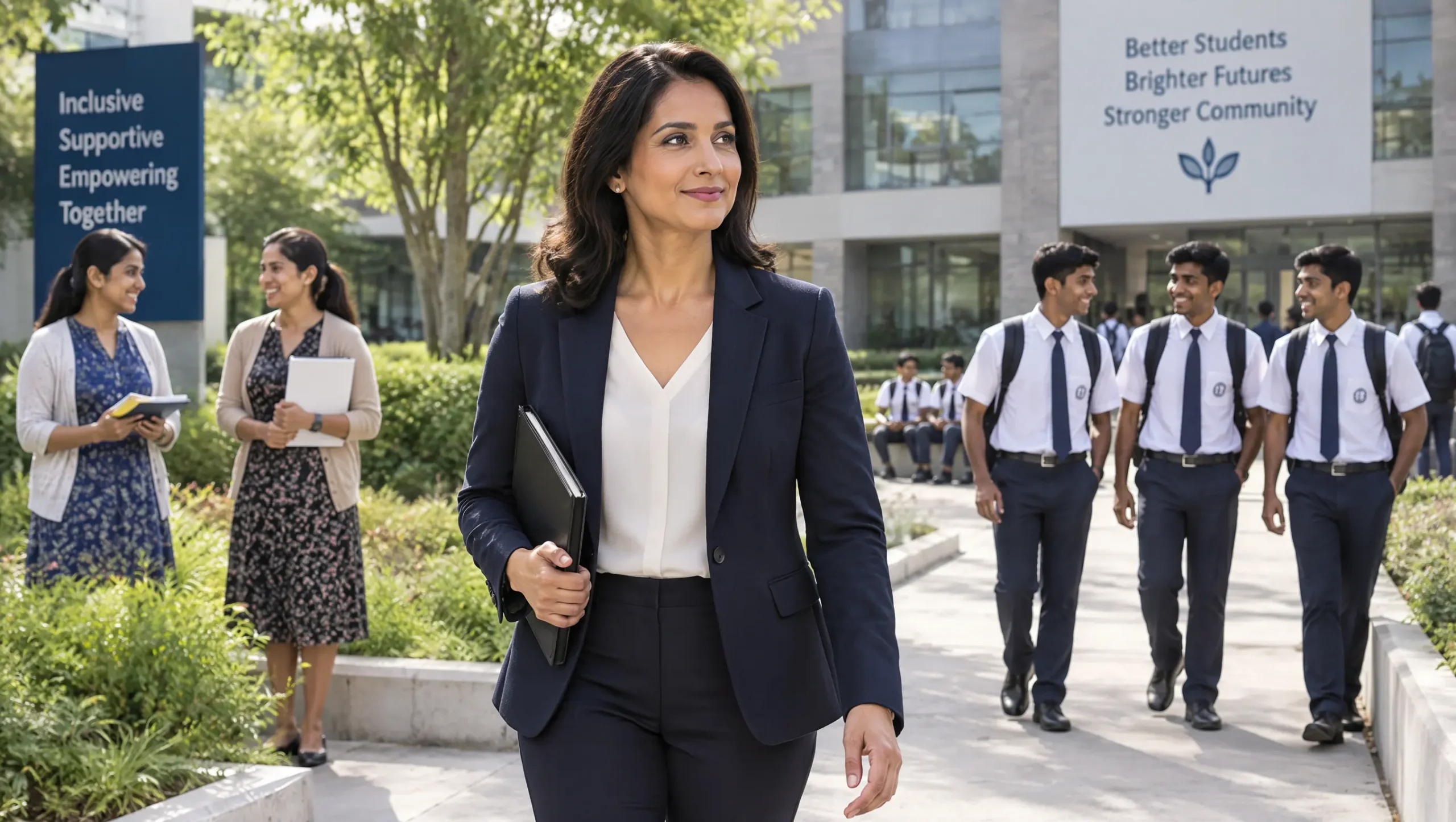
A Practical Daily Checklist for Effective School Leadership
It is very difficult to run a school because it involves much more than just managing staff, maintaining records, and ensuring discipline. A school principal plays a vital role in creating an environment where teachers feel supported, students feel safe, and meaningful learning takes place every day.
In my 20 years of experience in education and school leadership, I have learned that effective school management depends on consistent attention to small but important details.
You do not need to solve every problem yourself. However, you must ensure that the right things are happening at the right time.
Here I am giving 15 essential things every school principal should check daily, whether the school is large or small, public or private, or anywhere else in the world.
1. Verify Staff Attendance and Punctuality
Ensure teachers and other staff arrive on time and are ready to begin their responsibilities. If someone is absent, make sure suitable arrangements are made so that students’ learning is not disturbed.
2. Review Student Attendance
You must check class-wise attendance and identify students who are frequently absent or arriving late. Follow up with families when necessary. You know, regular attendance is an important foundation for academic progress.
3. Inspect School Cleanliness and Facilities
You must examine classrooms, washrooms, corridors, playgrounds, drinking water facilities, and other essential areas. A clean, hygienic, well-maintained campus supports students’ health, comfort, and concentration.
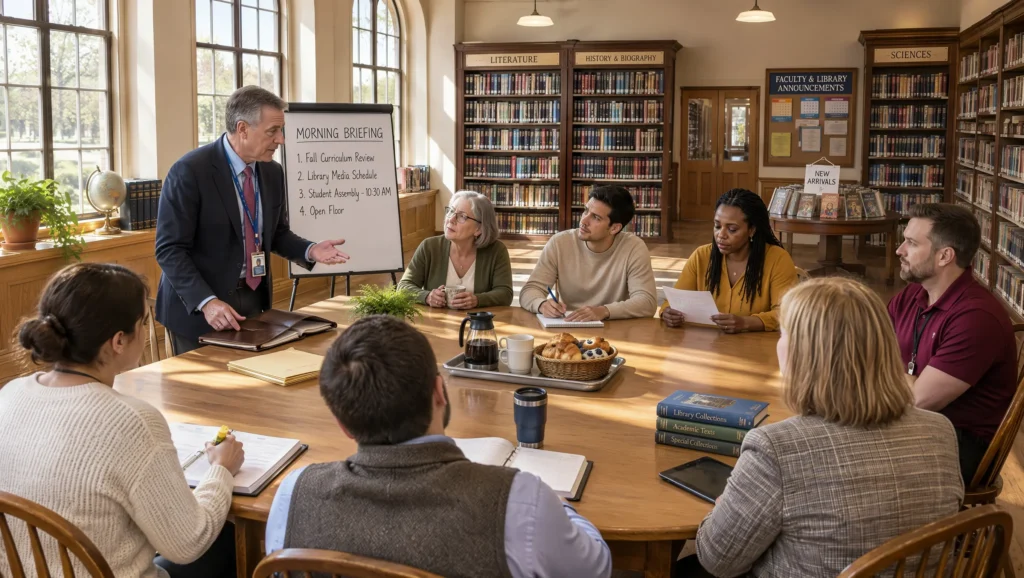
4. Monitor the Morning Assembly
You should observe whether the school day begins in an organized and positive manner. The assembly can help students develop confidence, discipline, communication skills, and a sense of responsibility.
5. Visit Classrooms and Observe Teaching
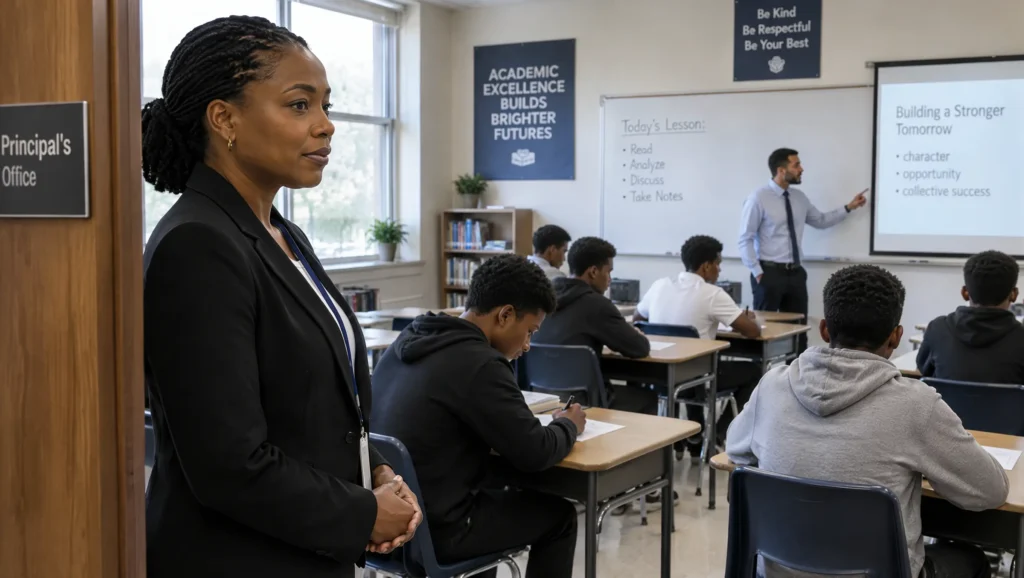
You do not remain in your office throughout the day. You should visit classrooms to observe how teachers explain concepts, engage students, ask questions, and respond to different learning needs.
You can use these visits to encourage teachers and identify opportunities for improvement. It is not merely to find faults.
6. Monitor Student Learning and Reading Skills
Check whether students are developing essential skills in reading, writing, communication, and subject understanding. Pay particular attention to students who struggle to read instructions, understand questions, or complete classroom tasks independently.
Remember that, students cannot fully benefit from lessons if they cannot understand what they are expected to learn.
7. Review Lesson Plans and Syllabus Progress
You should ensure that teachers are following the academic plan and making reasonable progress through the syllabus. Identify delays early and help teachers address them without compromising students’ understanding.
Completing the syllabus is important, but meaningful learning matters even more.
8. Check Homework and Notebook Feedback
You should ensure that homework is purposeful, age-appropriate, and manageable. Check whether teachers review students’ notebooks and provide useful feedback.
Homework should reinforce learning, not become a routine burden for students and families.
9. Promote Positive Discipline
You can observe student behaviour in classrooms, corridors, playgrounds, and common areas. Address problems fairly and consistently.
Effective discipline is not about creating fear. It is about helping students understand expectations, develop self-control, and take responsibility for their actions.
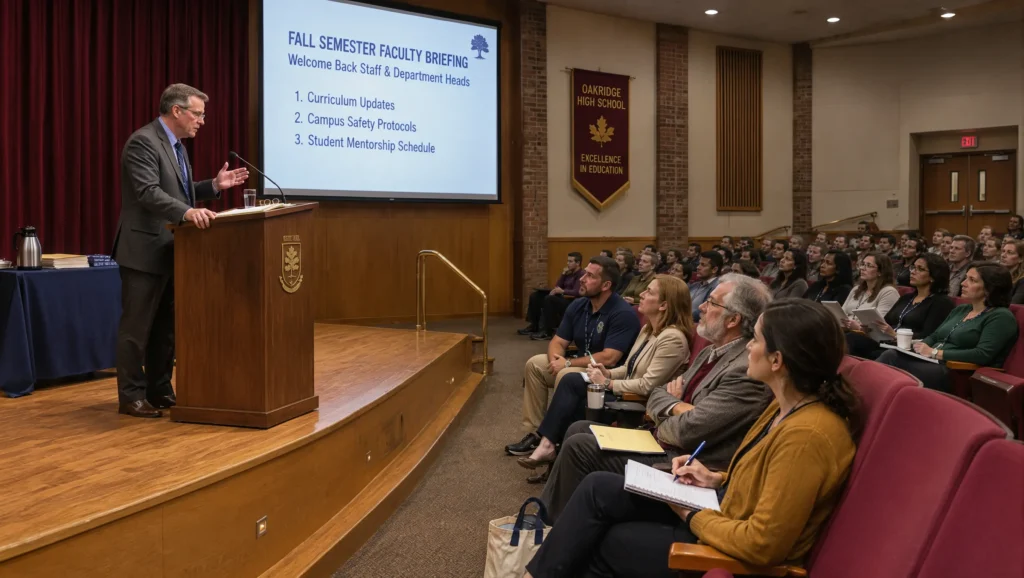
10. Talk to Students
You make time to speak with students during classroom visits, breaks, or other suitable moments. Ask simple questions such as:
- Are you able to understand your lessons?
- Is anything making learning difficult for you?
- Do you feel safe and respected at school?
- What would help you learn better?
Sometimes, a short conversation can reveal a problem that formal reports fail to show.
11. Support and Motivate Teachers
You must check whether teachers have the resources, guidance, and support they need. Listen to their concerns, appreciate their efforts, and provide constructive suggestions when necessary.
A principal’s encouragement can make a meaningful difference to a teacher’s confidence and motivation.
12. Check Student Safety and Well-Being
You should ensure that students are adequately supervised, especially during arrival, departure, breaks, and transitions between activities. Check that safety procedures, first-aid arrangements, and systems for reporting concerns are in place.
Pay attention to students who appear distressed, isolated, or unusually withdrawn. Their well-being deserves timely and sensitive attention.
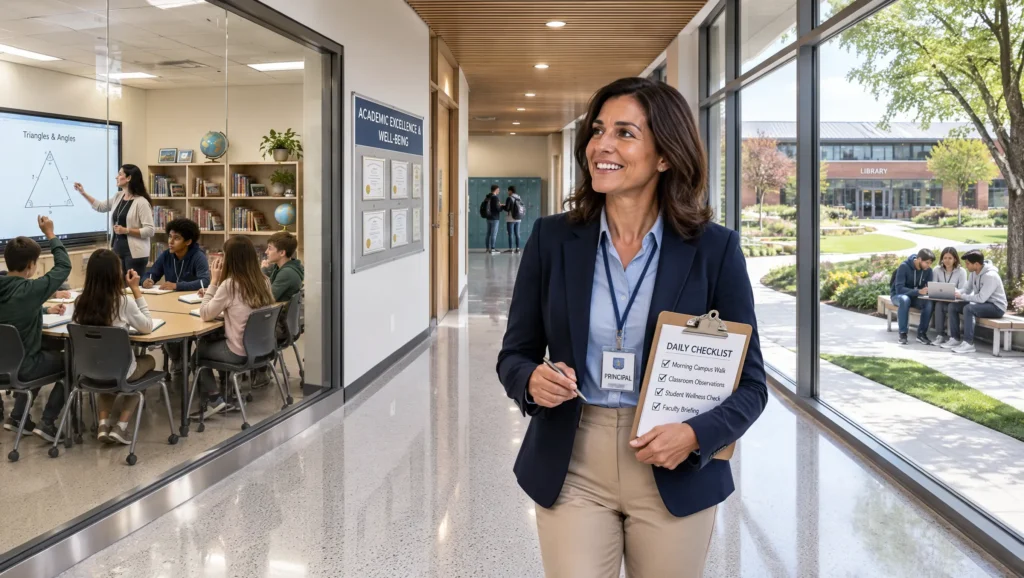
13. Review Administrative Responsibilities
Check important records, examination arrangements, pending documents, staff communications, and other essential administrative tasks.
You do not need to personally handle every document. Instead, ensure that responsibilities are clearly assigned and important deadlines are not missed.
14. Maintain Effective Parent Communication
You should review important messages and concerns raised by parents. Ensure that urgent issues are addressed promptly and that appropriate follow-up takes place.
Good communication builds trust between the school and families. Parents are more likely to cooperate when they feel that their concerns are heard and treated respectfully.
15. Review the Day and Plan for Tomorrow
Before leaving school, take a few minutes to reflect on the day’s progress.
Ask yourself:
- What went well today?
- Which problems need attention?
- Which students or teachers need additional support?
- What important tasks remain incomplete?
- What should be the priority tomorrow?
A brief daily review helps you move from reacting to problems towards planning meaningful improvements.
A Simple Daily Self-Check for Principals
At the end of each working day, ask yourself these five questions:
1. Academic progress: Did I take a meaningful step towards improving teaching and learning?
2. Student welfare: Did I help ensure that students were safe, supported, and respected?
3. Teacher support: Did I encourage or guide at least one teacher?
4. School management: Did I address an important administrative or operational responsibility?
5. Continuous improvement: Did I identify a practical action that can make tomorrow better?
You can also use a simple checklist to mark each responsibility as completed, pending, or requiring follow-up.
Conclusion
An effective school principal does not measure success by the number of hours spent in the office or the number of instructions given to staff.
True leadership is reflected in the quality of teaching, the progress of students, the confidence of teachers, the trust of parents, and the overall atmosphere of the school.
You do not have to complete every task personally. Your responsibility is to build a reliable team, monitor what matters, make thoughtful decisions, and ensure that important issues receive attention.
A good principal manages the school. A great principal creates the conditions in which teachers can teach well, and students can learn, grow, and thrive.
Frequently Asked Questions (FAQs)
1. What are the most important daily responsibilities of a school principal?
A school principal should monitor teaching and learning, staff and student attendance, school cleanliness, student safety, discipline, teacher support, parent communication, and essential administrative responsibilities. The priority should always be creating a safe and effective learning environment.
2. How can a school principal improve teaching and learning every day?
A principal can improve teaching and learning by visiting classrooms, observing teaching practices, reviewing students’ reading and writing skills, checking academic progress, and identifying learners who need additional support. Regular classroom interaction and constructive feedback help teachers improve their practices.
3. Should a school principal spend most of the day in the office?
No. Although administrative work is important, a principal should also spend sufficient time in classrooms and other school areas. Interacting with students, supporting teachers, observing school activities, and understanding daily challenges provide valuable insights into how the school is functioning.
4. How can a principal motivate teachers and maintain discipline?
A principal can motivate teachers by appreciating their efforts, listening to their concerns, providing constructive feedback, and offering professional support. Student discipline should be maintained through clear expectations, consistency, respectful communication, and positive guidance rather than fear or humiliation.
5. How can a school principal use a daily checklist effectively?
A principal can use a simple checklist to mark each responsibility as completed, pending, or requiring follow-up. Reviewing the checklist at the end of the day helps identify unresolved issues, assign responsibilities, and establish priorities for the next working day. The checklist should support effective leadership rather than become another administrative burden.
You may like to read:
- 15 Things Every School Principal Should Check Every Day
- Before You Correct a Child, Ask Yourself This One Question
- Why Do Hardworking Teachers Sometimes Achieve Poor Results? 6 Reasons and Solutions
- How to Improve English Reading Skills in Your School: A Practical 90-Day Plan
- Teacher Empathy: 7 Ways to Build Strong Student Relationships
Quite educative n essential n effective information for we like Principal….who are striving n struggling for the betterment of Schools…
Your suggestion is our energy.
I am a teacher.so your article is very useful for me.
I will like to know about how a principal can really manage an institution well
Thanks! I understood a lot of things that I did without reading this post. I will reuse this information when…


Educational & Management Expert, Accredited Teacher & Soft Skills trainer,Certified Counselor,Writer, and Author
Quite educative n essential n effective information for we like Principal….who are striving n struggling for the betterment of Schools 🏫🏫🏫🏫 Day n night….n want to make school 🏫 safe heaven 🌠 for generations to come Ji 🙏🙏🙏🙏🙏