
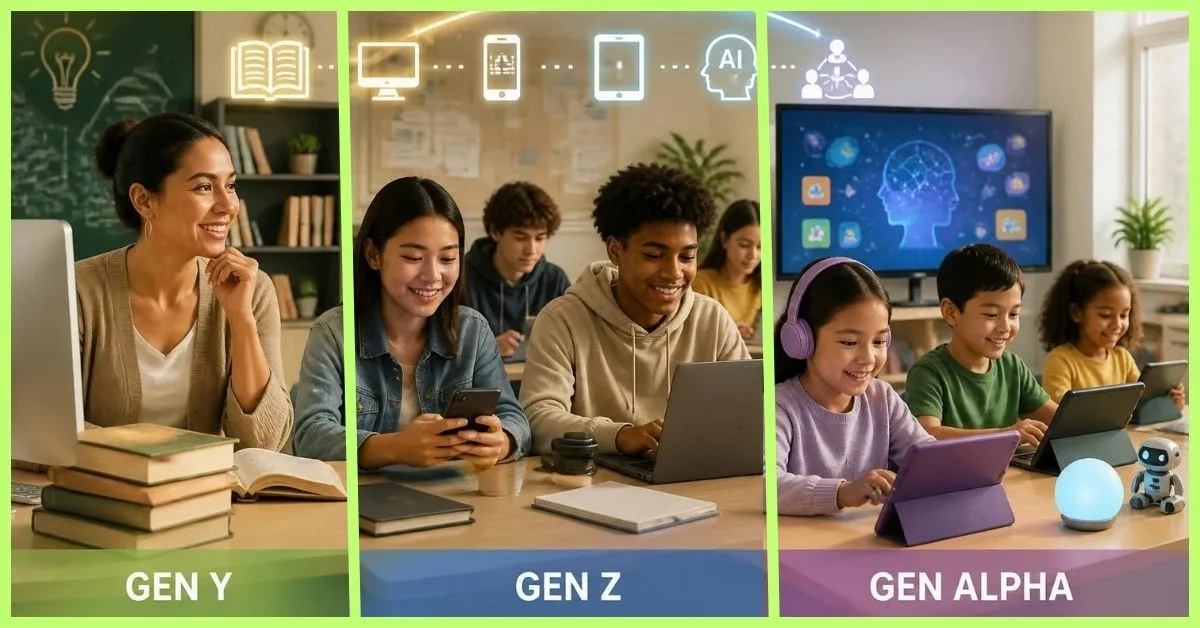
Each generation lives in a different world. That world is made up of tech, culture, experiences and social change. As a teacher, it is important that you know these generational differences so that you can understand your students better. In this article, we will learn about the different generations and what makes them unique.
Generation Y (Millennial’s)
Birth years: Around 1981–1996
They grew up during a period of rapid technological change. They experienced childhood without smartphones but gradually adopted computers, the internet, and social media.
Features
They are open to new ideas and different ways of working and learning. They value meaningful work more, personal growth and opportunities to develop their skills. They value teamwork, collaboration, constructive criticism, and recognition for their effort.
Now many Millennial’s are teachers, parents, school leaders and professionals. Their experiences can be a bridge between the generations and today’s digital learners.

Generation Z (Gen Z)
Birth years: Around 1997–2012
Generation Z has grown up with smartphones, social media, YouTube, instant messaging, and easy access to online information. Technology is part of their everyday life.
Features
Digital technology is very comfortable for Generation Z. They want information that is quick, easy to access, visual and interactive. They can communicate easily through digital platforms and express their opinions freely. They usually want learning to be interesting, meaningful, and related to their lives.
As a teacher, you may find that using good explanations alongside videos, visuals, activities, discussions, and real-life examples leads to high engagement with Gen Z students.
Generation Alpha
Birth years: Around 2013–2024
Generation Alpha is the youngest of these generations. They are growing up in a world of smartphones, tablets, artificial intelligence, online learning, smart devices, and highly personalised digital experiences.
Features
Digital technology, AI, and smart devices are a natural part of their life. They are curious, exploratory, and prefer interactive, visual, and hands-on learning experiences. They respond well to videos, games, digital tools, and quick feedback.
As a teacher, you may need to create interactive, meaningful, and creative learning experiences to connect with their world.
What Should You Remember?
Generational characteristics are useful for understanding the trends, but you know every student is unique. You should never think that every Gen Z or Gen Alpha student will behave in the same way.
You know, your classroom may include students with different personalities, abilities, family backgrounds, interests, and learning preferences. You must know your learner.
When you understand the present world your students are growing up in, you can choose better ways to communicate, motivate, engage, and support your students.
FAQ’s
1. What are Millennial’s or Generation Y?
Millennial’s, or Generation Y, are generally people born between 1981 and 1996. They grew up during a period of rapid technological and social change.
2. What is Generation Z?
Generation Z generally refers to people born between 1997 and 2012. They have grown up with smartphones, social media, digital communication, and easy access to online information.
3. What is Generation Alpha?
Generation Alpha generally refers to children born from 2013 onward. They are growing up with smartphones, tablets, AI, smart devices, and highly interactive digital experiences.
4. Why should teachers understand different generations?
Understanding generational trends can help you choose more effective ways to communicate, engage, motivate, and support your students.
5. Do all students of the same generation learn in the same way?
No. Generational characteristics describe broad trends, but every student is unique. Your students may have different personalities, abilities, interests, backgrounds, and learning preferences.
You may like to read:-
- Gen Y, Gen Z & Gen Alpha: Do You Really Understand Your Learners?
- How to Be an Effective Teacher: 21 Habits of Highly Effective Teachers
- Good teachers focus on marks; Great teachers focus on growth.
- Teaching Gen Z Students: What Has Changed?
- Teacher Workload and Pressure: How Teachers Can Work Smarter
Sir your content is reflected on real classroom situation.
Hello Sir, This is a powerful and so meaningful message. As head of a secondary school, this is a philosophy…
We will follow it…
Thank you very much for you advice that gave an important information towards good teacher and preparation of lesson plan.…


This is wonderful. This report is fantastic.