
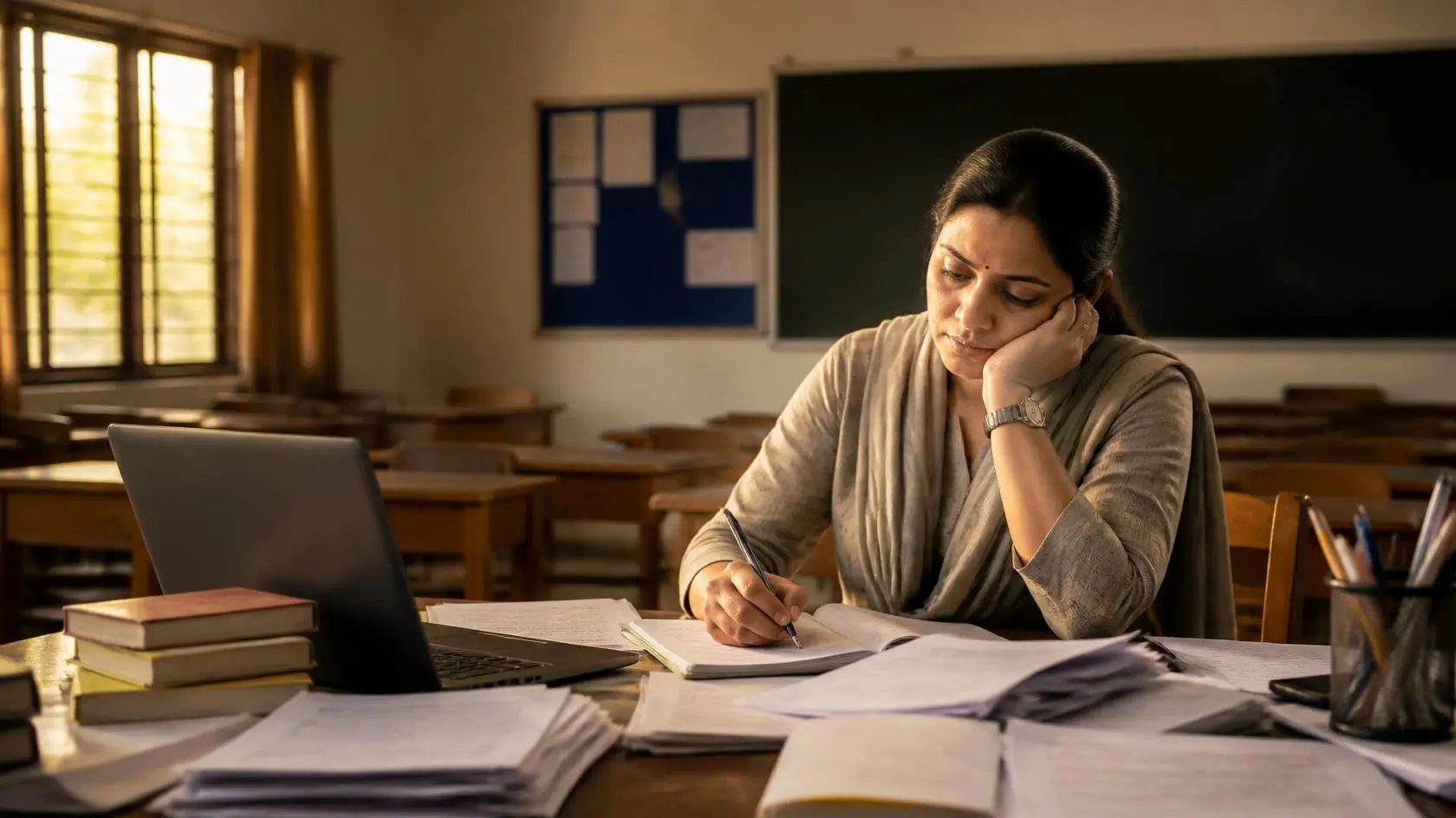
Have you ever reached home after a long day at school and thought, “I am tired, but my work is still not finished”?
Over the past few days, a number of teachers have messaged me and shared their experiences about their work overload, increasing responsibilities, and pressure from the school management. Their messages made me think deeply about what teachers are going through every day. That is why I decided to write something about this important issue. It is not just from my own perspective, but in response to the problems many teachers have shared with me.
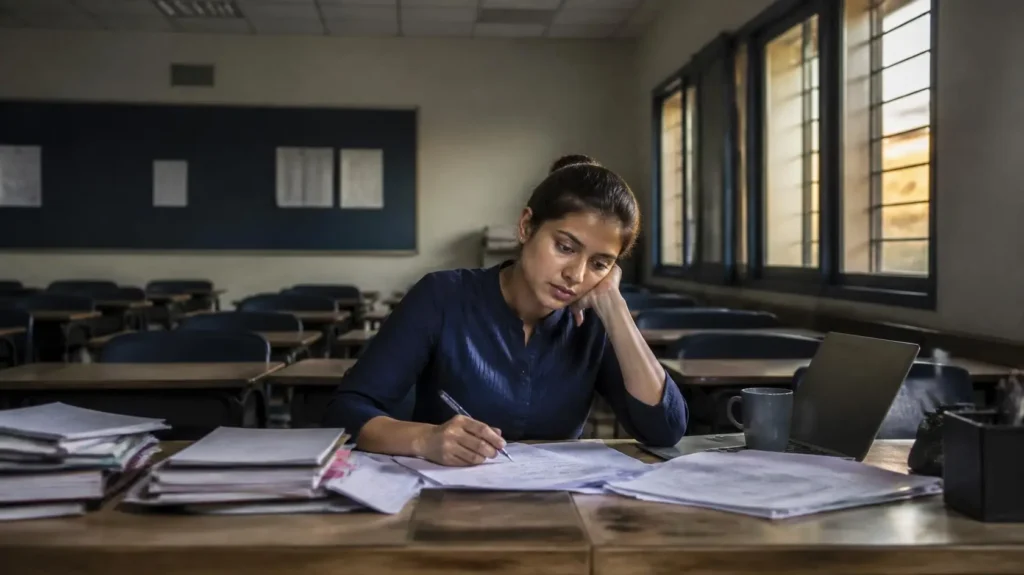
You taught your classes, checked notebooks, prepared lessons, assessed students, attended meetings, completed records, answered messages, handled discipline, and solved unexpected problems. And tomorrow, you have to do it all again.
Teaching is one of the most meaningful professions in the world. Every day, teachers enter classrooms with the responsibility of shaping young minds. But behind a teacher’s smile, there can be pressure that students and others may never see.
Remember, today, a teacher is not only expected to teach.
Teachers are expected to be educators, mentors, counsellors, administrators, technology users, communicators, motivators, problem-solvers, and sometimes even mediators between students and parents.
When responsibilities continue to increase but time and energy remain limited, teaching can become too much.
What are the biggest problems teachers have to deal with, and how can we help?
1. You Have Too Much Work
You may have noticed that teaching is only one part of a teacher’s daily responsibilities0.
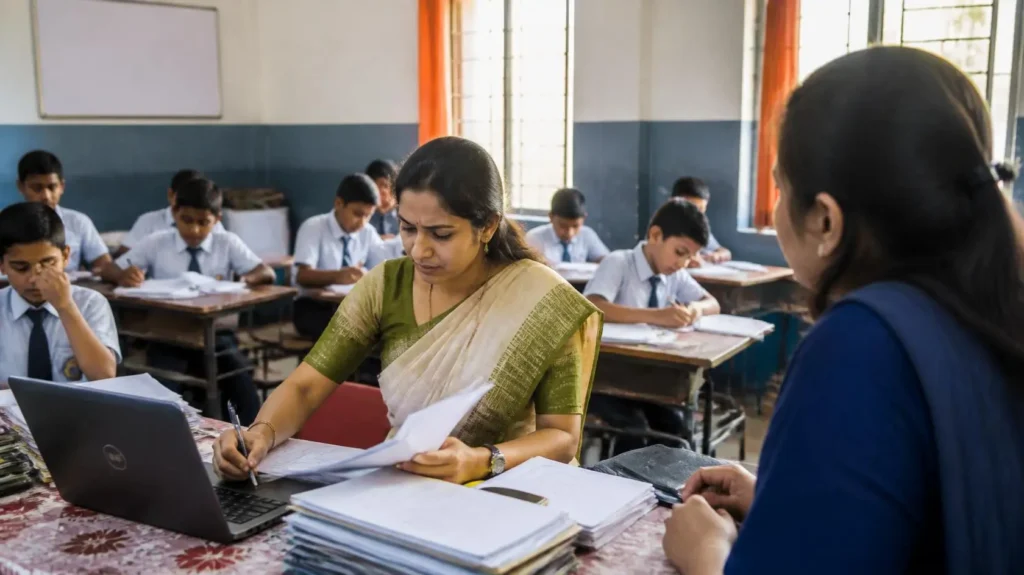
Your time is consumed by lesson preparation, notebook checking, assessments, examination duties, reports, documentation, meetings, administrative work, parent communication, and other responsibilities.
Sometimes you spend more time completing paperwork than thinking about how to make tomorrow’s lesson better.
What can be done?
You should learn to prioritise.
You understand that every task has the same level of importance. You can use simple planning systems, organise recurring work, avoid unnecessary duplication, and use technology where it genuinely saves time.
Schools can also review whether every task assigned to teachers is necessary.
The truth is that a busy teacher is not always a productive teacher.
2. You Teach Students with Different Learning Needs
Actually, a classroom usually consists of students who learn in different ways.
In a classroom, some students understand quickly. Some need repetition. Some learn better through activities. Others need individual attention.
You may explain the same concept several times and still find that some students are struggling.
What can be done?
You can apply different teaching approaches.
Yiu can combine explanation with examples, activities, questions, visual materials, peer learning, and practical experiences. You should give additional support to students who need it without making them feel inferior.
You might be wondering that different learners may need different paths to reach the same destination.
3. You Face Classroom Discipline Challenges
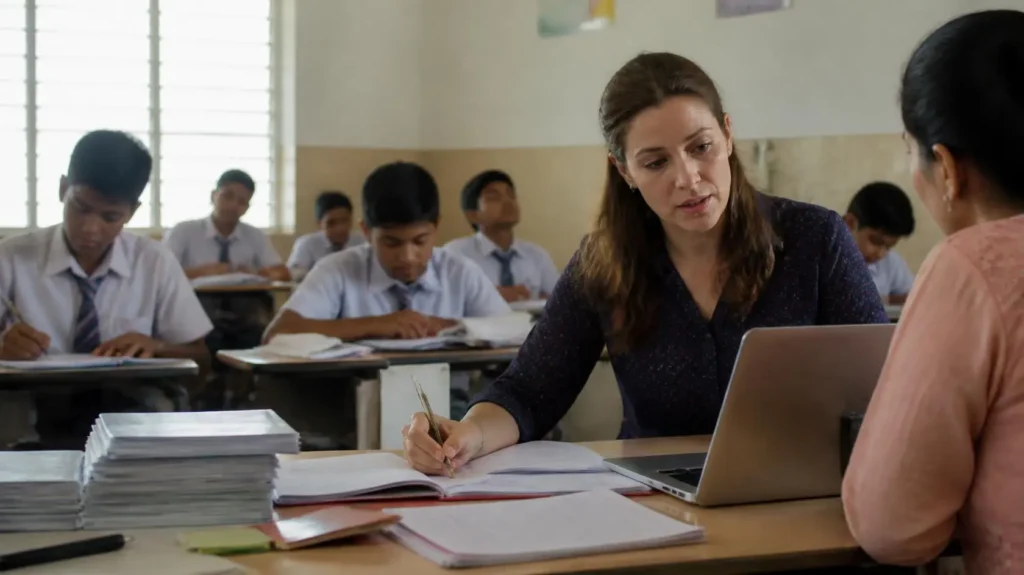
You know, managing different behaviours in the classroom can be one of the most demanding parts of teaching. Your students’ talking, unnecessary movement, lack of attention, incomplete homework, conflicts between students, and inappropriate use of technology can interrupt learning.
What can be done?
You understand one thing: discipline should begin with clear expectations.
You should establish classroom rules, explain why they matter, apply them consistently, and build positive relationships with students.
Instead of immediately asking, “Why are you behaving badly?” You try to ask, “What is happening, and how can we improve this?”
You remember that firmness and kindness can exist together.
Before you move to the next point, think about your classroom…good discipline should teach responsibility, not create fear.
4. You Face Pressure from Parents
Your parents naturally want their children to succeed. But you may sometimes experience pressure about marks, homework, discipline, communication, and academic performance. You may feel that every decision is being questioned.
What can be done?
Think about it… Communication is the key.
You should share your problems early instead of waiting until a problem becomes serious. You can talk about a student’s strengths as well as areas for improvement.
You understand that parents and teachers should see each other as partners rather than opponents. When parents and teachers work together, students benefit the most.

5. You Are Expected to Keep Up with Technology and AI
Technology is changing education rapidly. You are expected to understand digital platforms, online resources, educational applications, artificial intelligence, and new methods of teaching. For some teachers, this can feel like another responsibility added to an already crowded schedule.
What can be done?
You do not need to learn every new tool. You can choose technology according to a simple question:
“Will this genuinely improve my students’ learning?”
You can learn one useful tool at a time.
Technology should reduce your unnecessary work and improve your learning. It will not create additional pressure.
6. You Carry the Emotional Problems of Students
You know, your students don’t come to school carrying only books and notebooks.
They also bring worries about examinations, friendships, family situations, confidence, failure, and their future. You often listen, encourage, guide, and support your students.
A simple sentence such as “I believe you can do this” may mean more to a student than a teacher realises.
What can be done?
You should be available to listen, but remember that you cannot solve every problem alone.
When a problem is beyond your role, involve parents, school leadership, or an appropriate counsellor.
Supporting a student does not mean carrying every problem alone.

7. You Feel Pressure to Produce Results
Your schools, parents, and students all want good results and good academic performance.
But when results become the only measure of success, teachers may feel enormous pressure.
A teacher can begin asking, “Did my students get enough marks?” while forgetting to ask:
“Did they understand?” “Did they become more confident?” “Did they learn how to think?”
What can be done?
You can focus on both achievement and learning. You should use regular formative assessment, identify learning gaps early, provide feedback, and celebrate genuine improvement—not only high marks.
8. You Have Very Little Time for Yourself
Now, many teachers take schoolwork home.
You prepare lessons at night, check work after dinner, respond to messages, and think about students even after leaving school.
Gradually, the boundary between professional and personal life becomes unclear.
What can be done?
You should create reasonable boundaries.
You can set specific times for school-related communication whenever possible. You can plan tomorrow’s work before leaving school. You must take proper breaks during the day. You must allow yourself to rest without feeling guilty.
Rest is not laziness. Rest helps you return to your classroom with renewed energy.
9. You Sometimes Feel Unappreciated
You often work quietly.
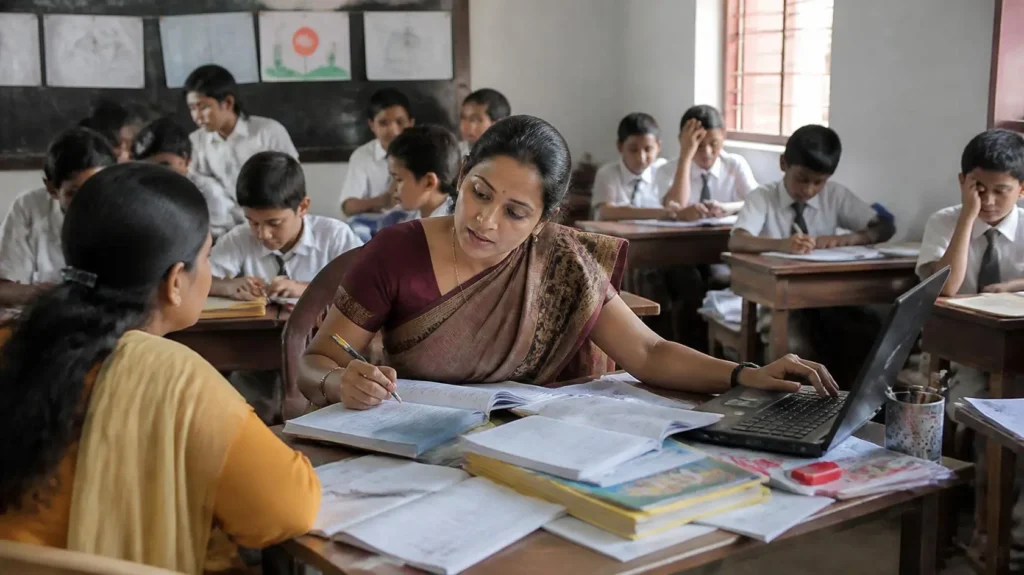
You stay back to help a student. You are spending extra time preparing a lesson. You are encouraging a child who has lost confidence. You solve problems that nobody notices.
Your every effort will not receive recognition.
What can be done?
Your schools can create a culture of appreciation. You know, recognition does not always have to be a major award. A sincere “Thank you,” a note of appreciation, or public acknowledgement of genuine effort can make you feel valued.
You should also learn to recognize your own progress.
All your meaningful work is not visible, but that does not make it less valuable.
10. You Are Expected to Be Strong All the Time
Perhaps one of the greatest pressures is the expectation that you should always be patient, energetic, positive, and emotionally strong.
But you are human beings too. You have difficult days. You feel tired.
You make mistakes.
What can be done?
Your school should create an environment where you can discuss challenges without fear of being judged.
You should support another teacher instead of competing unnecessarily.
You can share ideas. You can share resources. You can ask for help. You can learn from colleagues.
A strong teaching team can reduce the pressure on every individual teacher.
What Can School Leaders Do?
The responsibility for reducing teacher pressure does not belong to teachers alone.
School leaders can make a significant difference by reducing unnecessary paperwork and duplication, distributing responsibilities fairly, providing adequate preparation time, encouraging teamwork and collaboration, listening to teachers’ problems, supporting professional development, respecting reasonable personal boundaries, appreciating sincere effort, and creating a safe environment where teachers feel comfortable asking for help. A school should not only ask, “How can our teachers do more?” It should also ask, “How can we support our teachers to do their best without feeling overworked?”
You Also Need to Remember
You don’t have to solve every problem today. You don’t have to make every student learn at the same speed. You don’t have to use every new technology. You don’t have to be perfect every day. Your responsibility is to keep learning, keep improving, keep caring, and give your sincere best.
Sometimes your lesson will be excellent. Sometimes it won’t go as planned.
Some of your students will respond immediately. Some others will take much longer.
That is part of teaching.
Your teaching is a journey, not a performance.
Conclusion
When teaching becomes too hard, the answer is not simply to ask teachers to work harder.
Sometimes the answer is to work smarter, share responsibilities, simplify unnecessary tasks, build stronger teamwork, and take better care of the people who are doing the teaching.
Behind every lesson is a teacher. Behind every teacher is a human being with hopes, responsibilities, challenges, and emotions. A teacher who feels supported can teach with greater energy. A teacher who feels respected can work with greater commitment. A teacher who feels appreciated can continue inspiring others.
So, the next time you see a teacher working late, preparing a lesson, checking notebooks, helping a struggling student, or simply walking into the classroom with a smile, remember:
The teacher may be carrying more than you can see.
And sometimes, the most powerful thing we can give a teacher is not another responsibility but a little understanding, appreciation, and support.
FAQs
1. Why are teachers feeling more pressure today?
Teachers are expected to handle teaching along with documentation, assessments, meetings, parent communication, discipline, technology, and other responsibilities.
2. How can teachers manage their workload better?
Teachers can prioritise tasks, plan their work, avoid unnecessary duplication, use useful technology, and create reasonable boundaries between school and personal time.
3. How can school leaders reduce teacher pressure?
School leaders can reduce unnecessary paperwork, distribute responsibilities fairly, provide preparation time, encourage teamwork, listen to teachers, and appreciate their genuine efforts.
4. How can teachers deal with different student learning needs?
Teachers can combine explanations with activities, examples, questions, visual resources, peer learning, and individual support according to students’ needs.
5. Why is teacher support important?
A supported and appreciated teacher can bring greater energy and commitment to the classroom. Teacher well-being also matters because teaching is perform
You may like to read:-
- Teacher Workload and Pressure: How Teachers Can Work Smarter
- Students Are Losing Interest in Learning; What Can Teachers Do?
- How to Become a Well-Prepared Teacher: 8 Practical Strategies
- Good Teachers Give Knowledge; Great Teachers Create Curiosity
- 7 Things Students Expect from a Good Teacher
We will follow it…
Thank you very much for you advice that gave an important information towards good teacher and preparation of lesson plan.…
Great article many ideas that got. I’ll apply it
Absolutely inspiring! 🌟 A very meaningful perspective on teaching. A teacher’s role is not limited to giving knowledge or completing…




Hello Sir, This is a powerful and so meaningful message. As head of a secondary school, this is a philosophy…