
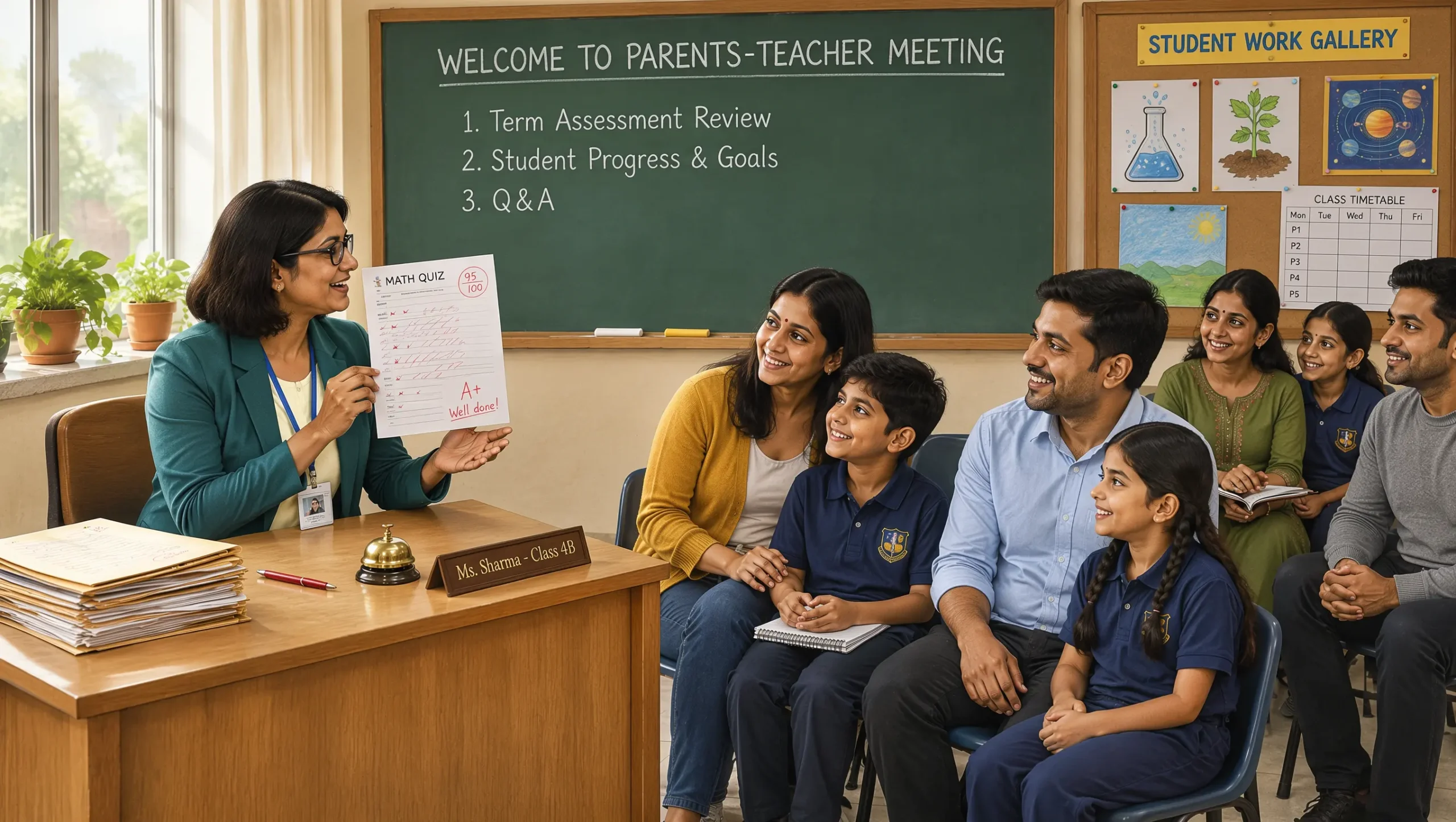
A parents’ meeting is not just an opportunity to discuss marks. It is an opportunity to build trust, understand a child’s needs, and work together for the child’s growth.
With over 20 years of experience in education and school leadership, I believe that the way a teacher communicates with parents can strengthen or weaken the relationship between home and school.
Here are 10 practical techniques every teacher can use to make parents’ meetings more meaningful and productive.
1. Welcome Every Parent with a Smile
Your first impression shapes how the conversation begins. Greet every parent warmly, maintain eye contact, and make them feel respected. A friendly welcome helps parents feel comfortable sharing their concerns.
Example Conversation:
Teacher: Good morning! Welcome to our school. Please have a seat. How are you?
Parent: Good morning, Teacher. Thank you.
Teacher: I am happy you could come today. Let us discuss how we can help your child progress.
2. Begin with Something Positive
Before discussing a child’s difficulties, mention one genuine strength. It could be the child’s kindness, creativity, regularity, or willingness to participate. Parents become more receptive when they know you recognize their child’s abilities.
Example Conversation:
Teacher: Your daughter is very kind and always helps her classmates. She also participates enthusiastically in classroom activities.
Parent: Thank you, Teacher. I am happy to hear that.
Teacher: These are wonderful qualities. Let us build on these strengths while working on the areas where she needs improvement.
3. Listen Before You Respond
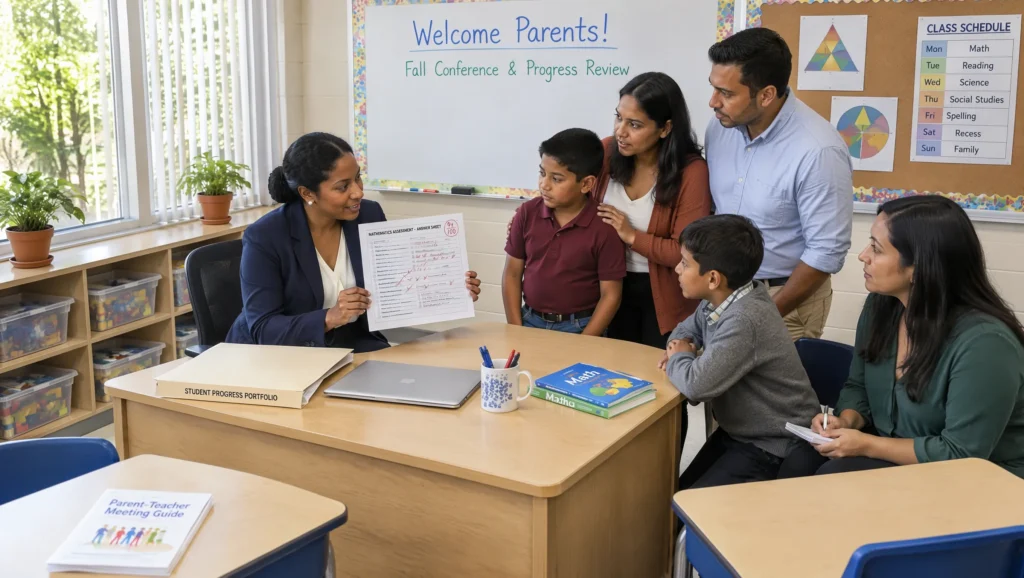
Some parents arrive with worries, complaints, or strong opinions. Give them time to speak without interruption. You should listen carefully, understand their concerns, and respond calmly. Sometimes, listening itself reduces tension.
Example Conversation:
Parent: Teacher, my son says that he does not understand some lessons in class.
Teacher: Thank you for sharing this with me. Could you tell me which subjects or lessons he finds difficult?
Parent: He finds English grammar difficult.
Teacher: I understand your concern. I will observe his learning needs and provide additional support.
4. Focus on the Child’s Overall Development, Not Just Their Grades
While a child’s academic performance is significant, it does not encompass their entire narrative. Discuss reading habits, classroom participation, behavior, confidence, friendships, and emotional well-being when relevant. Every child deserves to be understood beyond examination results.
Example Conversation:
Teacher: Your son’s marks are average, but he is very creative and works well with his classmates. He also shows interest in practical activities.
Parent: We are worried because his marks are not very high.
Teacher: I understand. Along with improving his academic performance, let us encourage his creativity, confidence, and participation. His overall development is equally important.
5. Use Facts Instead of Labels
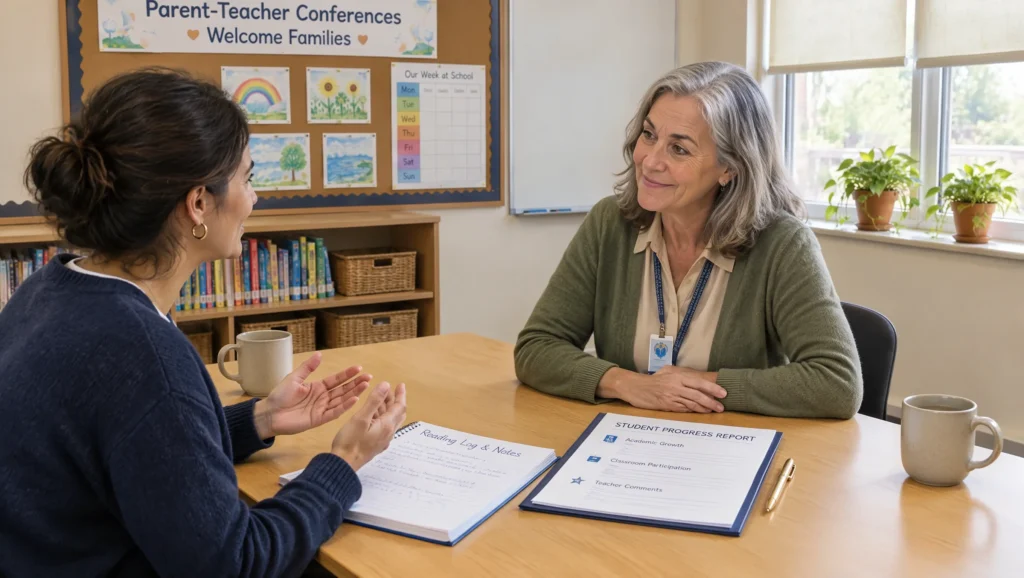
You should avoid saying, “Your child is lazy” or “Your child is weak.” Instead, explain what you have observed.
For example, say, “Your child needs more practice in reading English sentences.”
Your specific observations of a child lead to practical solutions. You know, labels often create negative reactions.
Example Conversation:
Teacher: Your child can identify many English words, but he finds it difficult to read complete sentences independently.
Parent: What can we do to help him?
Teacher: Please encourage him to read aloud for ten minutes every day. I will also provide additional reading practice at school.
6. Speak Calmly When Parents Disagree
Every parent will not agree with your observations. You should avoid arguments or taking criticism personally. You can explain your opinion respectfully, provide relevant examples, and focus on finding a solution together.
Example Conversation:
Parent: Teacher, I do not think my child talks too much in class. He is quiet at home.
Teacher: I understand. Children may behave differently at home and at school. I have noticed that he sometimes talks while instructions are being given.
Parent: I see. What should we do?
Teacher: Let us encourage him to listen during instructions and give him opportunities to speak at appropriate times. We can review his progress together.
7. Provide Practical Suggestions
Instead of telling parents to “pay more attention,” suggest specific actions. You can ask them to spend ten minutes daily listening to their child read, check homework regularly, or discuss what the child learned at school. Simple and clear suggestions are easier to follow.
Example Conversation:
Teacher: Your child needs more practice in reading English. Could you spend ten minutes listening to her read every evening?
Parent: Yes, Teacher. I can do that.
Teacher: Excellent! Please ask her to read slowly and explain the meaning of what she reads. Regular practice will help her improve.
8. Never Compare Children
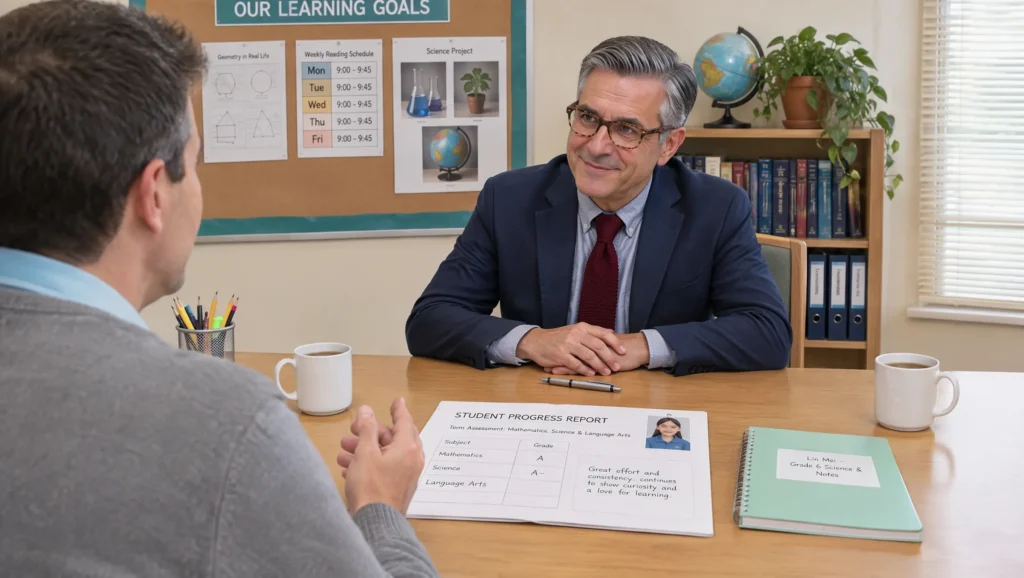
Avoid comparing a child with classmates, siblings, or toppers. Every child has different strengths, needs, and learning speeds. You can discuss the child’s progress and identify the next achievable goal.
Example Conversation:
Parent: Teacher, my son scores fewer marks than his classmates. I am worried about his progress.
Teacher: I understand your concern. Instead of comparing him with others, let us look at his own progress.
Parent: What should his next goal be?
Teacher: Let us focus on improving his reading skills and helping him score better in the next assessment. We will appreciate every step of progress.
9. End with a Shared Action Plan
Decide what the teacher and parent will do next. For example, the teacher may provide additional reading practice, while the parent supports daily reading at home. Agree on a suitable time to review progress.
Example Conversation:
Teacher: I will give your daughter extra reading practice at school.
Parent: I will make sure she reads at home every day.
Teacher: Wonderful! Let us follow this plan for the next two weeks and discuss her progress afterward.
Parent: Thank you, Teacher. We will work together.
10. Close the Meeting with Encouragement
Even when discussing serious concerns, end with hope and support. You can tell parents that improvement is possible with patience, consistent effort, and cooperation. Every child deserves another opportunity to grow.
Example Conversation:
Parent: Teacher, I am worried because my child is still finding mathematics difficult.
Teacher: Please do not lose hope. With regular practice and the right guidance, your child can improve.
Parent: Thank you for encouraging us.
Teacher: We are partners in your child’s development. Let us continue working together and celebrate every improvement.
A Final Word for Every Teacher
Remember that parents do not expect teachers to be perfect. They expect teachers to care about their children, listen to their concerns, and guide them honestly.
A successful parents’ meeting is not one in which the teacher wins an argument. It is one in which the teacher and parent leave with a shared commitment to the child’s progress.
When teachers and parents respect each other, children receive the strongest message of all: We are working together for your future.
Frequently Asked Questions (FAQs)
1. How can teachers handle parents’ meetings successfully?
Teachers can handle parents’ meetings successfully by welcoming parents warmly, listening to their concerns, discussing the child’s strengths, sharing specific observations, and agreeing on practical steps to support the child’s development.
2. What should teachers discuss during a parent-teacher meeting?
Teachers should discuss academic progress, reading and writing skills, classroom participation, behaviour, confidence, social development, and any specific learning needs relevant to the child.
3. How should teachers handle angry or dissatisfied parents?
Teachers should remain calm, listen without interrupting, acknowledge the parent’s concerns, explain their observations respectfully, and work towards a practical solution.
4. How can teachers encourage parents to support learning at home?
Teachers can suggest simple activities such as daily reading practice, regular homework routines, conversations about school activities, and positive encouragement without comparing children.
5. Why is communication between teachers and parents important?
Effective communication helps teachers and parents understand a child’s needs, maintain consistent support between home and school, address difficulties early, and promote the child’s overall development.
You may like to read:-
- 10 Practical Techniques for Teachers to Handle Parents’ Meetings Successfully
- Before You Correct a Child, Understand Their Behavior
- 15 Daily Reflection Questions for Modern School Principals
- What Makes a Great Principal? | 10 Must-Have Qualities | Part:2 Strong Communication Skills
- What Makes a Great Principal? | 10 Characteristics | Part:1 Visionary Leadership in School Principals
Quite educative n essential n effective information for we like Principal….who are striving n struggling for the betterment of Schools…
Your suggestion is our energy.
I am a teacher.so your article is very useful for me.
I will like to know about how a principal can really manage an institution well


Educational & Management Expert, Accredited Teacher & Soft Skills trainer,Certified Counselor,Writer, and Author

There are important techniques to practice for all educators. Appreciate for sharing it.