
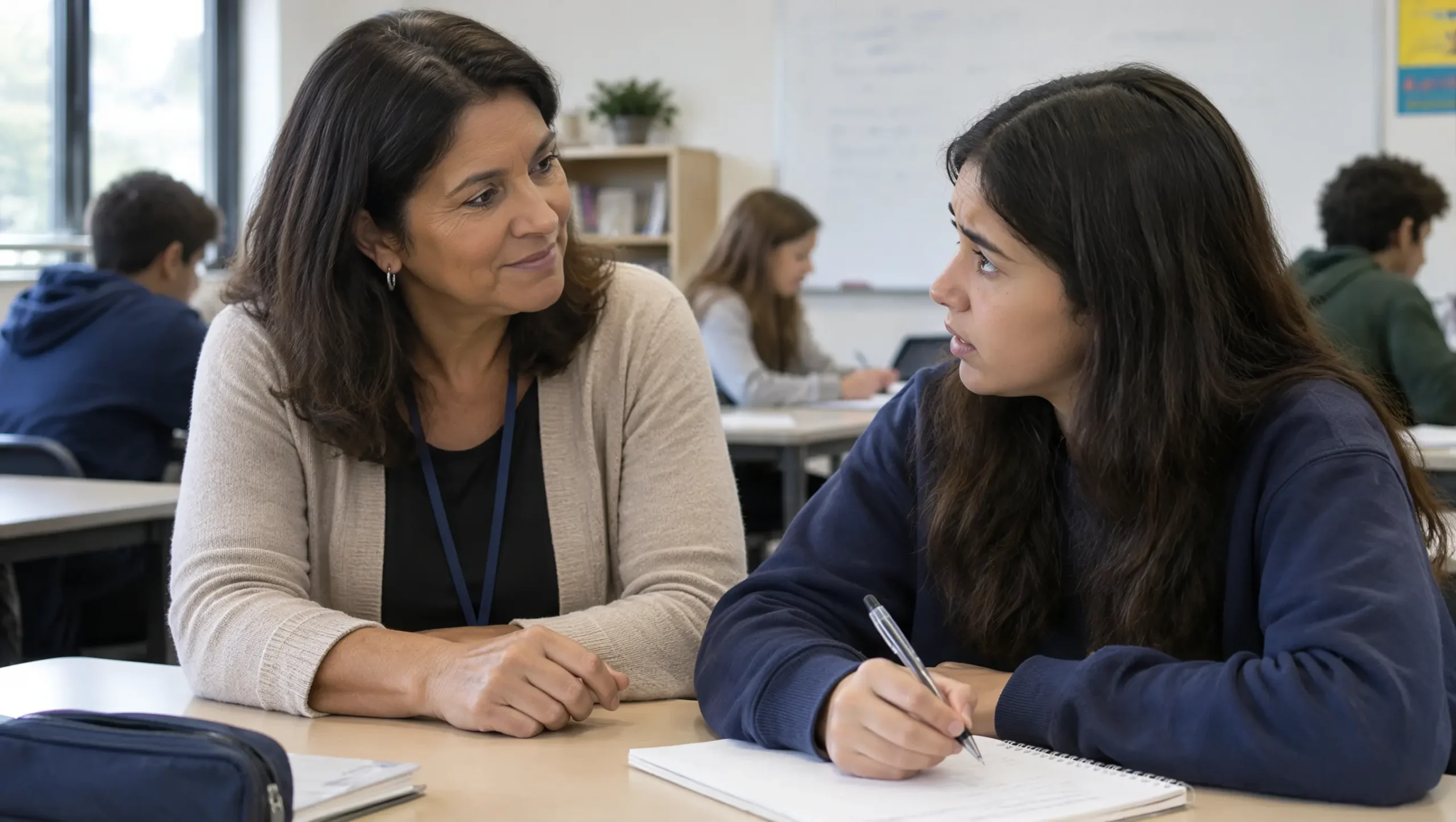
Good Teachers Correct Students. Great Teachers Understand Them.
As a teacher, you often come across students who talk too much, fail to complete their homework, disturb the class, make repeated mistakes, or struggle to follow instructions. Your immediate response may be to correct their behaviour. However, before correcting a student, have you ever stopped to ask yourself why the child is behaving that way?
In my 20+ years of experience in education and school leadership, I have learned an important lesson: a child’s behaviour often tells us something that words cannot express.
Good teachers correct students when they make mistakes. Great teachers try to understand the reasons behind those mistakes. They know that every child is different and that effective teaching requires patience, observation, empathy, and understanding.
As a teacher, your responsibility is not only to correct students but also to help them understand their mistakes, improve their behaviour, and grow into confident and responsible individuals.
Let us discuss how you can become a teacher who understands students before correcting them.
1. Understand the Reason Behind the Behaviour
When a student repeatedly talks during your lesson, your first reaction may be to scold the child. However, the student may be seeking attention, struggling to understand the lesson, feeling restless, or trying to connect with classmates.
Similarly, a child who does not complete homework may be careless, but there could also be other reasons. The child may not have understood the assignment, may be struggling with the subject, or may not have received adequate support at home.
Instead of immediately labeling the student as careless or indisciplined, try to understand the situation.
Practical tip: Observe the student’s behaviour and speak privately when necessary. Ask simple questions such as, “I noticed that you have not completed your homework. Is there something you are finding difficult?”
Ask yourself:
- Do I try to understand why a student is behaving in a particular way before correcting the child?
- Have I checked whether a student who fails to complete homework is facing learning difficulties?
- Do I observe repeated behaviour patterns instead of reacting to individual incidents?
- Do I speak privately with students to understand their difficulties?
- Before labelling a student as careless or indisciplined, do I consider other possible reasons for the behaviour?
Sometimes, a short conversation can reveal what repeated scolding cannot.
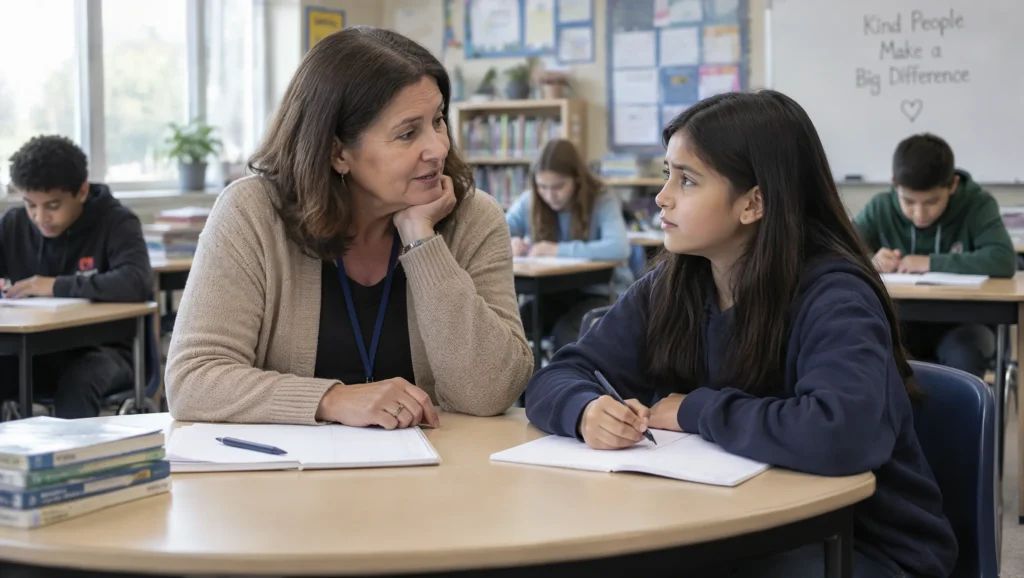
2. Correct the Mistake Without Hurting the Child
Students make mistakes while learning. They may give incorrect answers, forget their homework, make spelling errors, or behave inappropriately in the classroom.
Correction is necessary, but the way you correct a student makes a difference.
If you embarrass a child in front of classmates, the child may become afraid of answering questions or participating in classroom activities. Instead of learning from the mistake, the student may begin to fear making another one.
For example, when a student gives a wrong answer, you can say, “Good try. Let us understand this together,” rather than making the child feel ashamed.
Practical tip: Correct the behaviour, not the child’s identity. You should avoid calling students lazy, weak, careless, or hopeless. You can explain what went wrong and guide them towards improvement.
Remember that, your words can either encourage a child to try again or discourage the child from trying at all.
Ask yourself:
- Do I correct students without embarrassing them in front of their classmates?
- Do my words encourage students to learn from their mistakes rather than fear making them?
- Do I focus on correcting the behaviour instead of labelling the child’s personality?
- When a student gives a wrong answer, do I guide the child towards the correct answer patiently?
- Do I help students understand how to improve instead of simply pointing out what they did wrong?
3. Listen Before You Judge
As teachers, we often hear only one side of a situation before deciding what happened. When two students quarrel, we may correct the student who speaks loudly or reacts first without understanding the complete situation.
However, a student’s visible reaction does not always tell the whole story.
A child who becomes angry may be feeling hurt. A student who remains silent may be afraid to speak. A child who refuses to participate may lack confidence or may be worried about making mistakes.
Before you reaching a conclusion, give students an opportunity to explain themselves.
Practical Tip: Listen patiently without interrupting. Ask both students to explain what happened, and help them identify a fair and appropriate solution.
Listening does not mean accepting every explanation or ignoring inappropriate behaviour. It means understanding the situation before deciding how to respond.
When students feel that their teachers listen to them fairly, they are more likely to communicate honestly and accept guidance.
Ask yourself:
- Do I listen to all the students involved before deciding who is responsible for a conflict?
- Do I allow students to explain their feelings without interrupting them?
- Do I avoid making quick judgments based on a student’s first reaction?
- When students disagree with me, do I listen to their views respectfully?
- Do I help students find fair solutions instead of simply deciding who should be punished?
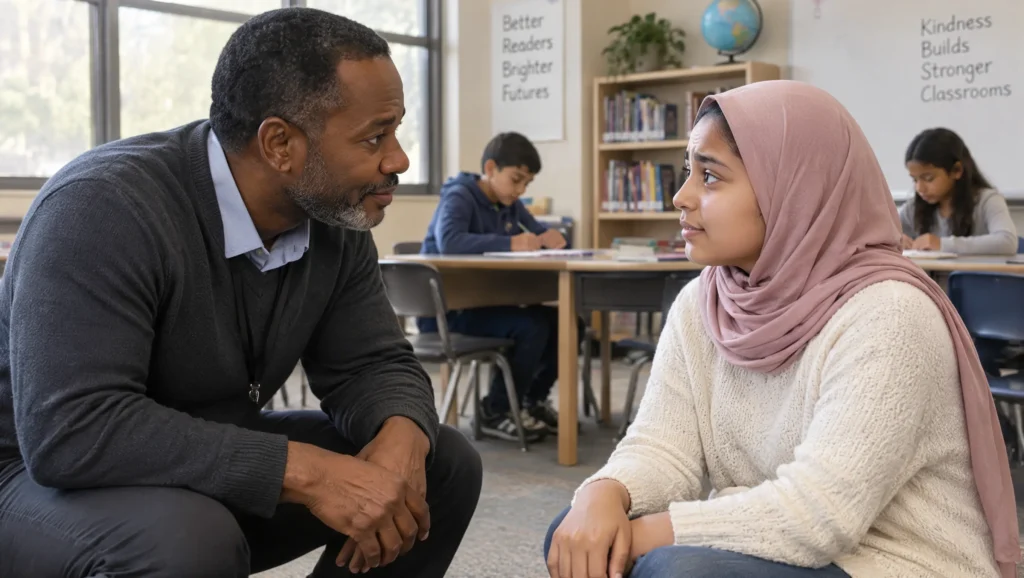
4. Recognize That Every Child Is Different
In every classroom, you will find students with different abilities, interests, learning speeds, family backgrounds, and levels of confidence.
Some students understand a concept immediately, while others need additional explanations and practice. Some students participate actively, while others need encouragement before they feel comfortable speaking.
If you expect every child to learn and behave in exactly the same way, you may overlook the individual needs of your students.
For example, a student who reads English slowly may not be unwilling to learn. The child may need regular reading practice, patient guidance, and opportunities to experience small successes.
Practical Tip: Identify the areas in which each student needs support. You can provide additional explanations, individual attention, practice activities, or encouragement according to the child’s needs.
Your goal should not be to make every student identical. It should be to help every student make meaningful progress.
Ask yourself:
- Do I recognise that students learn at different speeds and have different learning needs?
- Do I provide additional support to students who struggle with basic reading, writing, or understanding?
- Do I avoid comparing students’ abilities and progress in ways that discourage them?
- Do I use different explanations, activities, or learning resources when students need additional help?
- Do I measure each student’s progress against their own learning journey, as well as appropriate learning expectations?
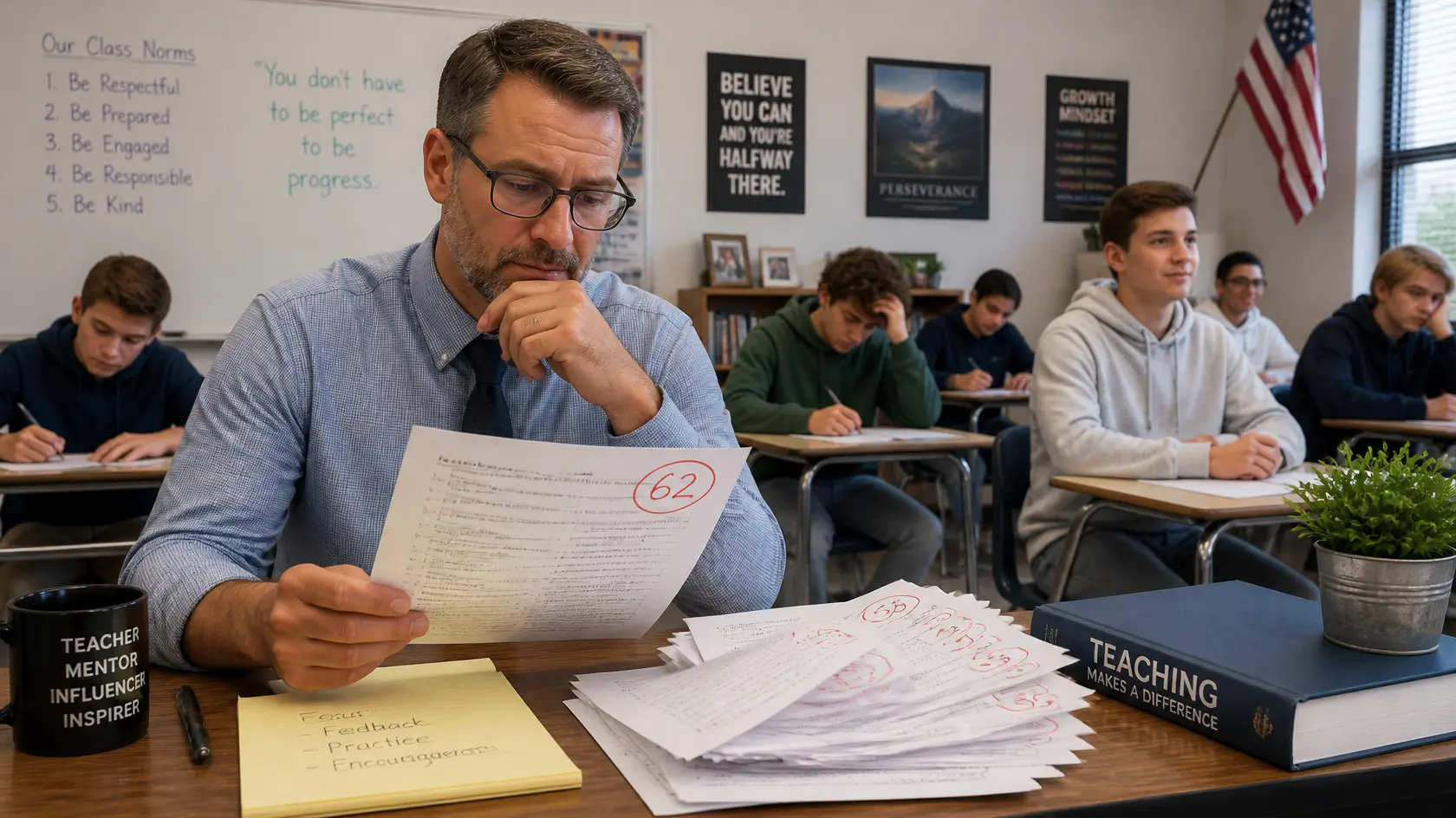
5. Look Beyond Marks and Academic Performance
A student’s marks do not reveal everything about the child.
A student who scores poorly in examinations may be hardworking but may lack basic reading skills. Another student who performs well academically may struggle with confidence, friendships, or emotional challenges.
When you focus only on marks, you may miss opportunities to understand your students as individuals.
Instead of asking only, “Why did you score fewer marks?” try asking, “Which part did you find difficult?” or “How can I help you improve?”
Practical Tip: You should always monitor students’ progress, identify learning gaps, appreciate their efforts, and provide specific guidance for improvement. You can celebrate small achievements, especially when a student has worked hard to overcome a difficulty.
When students know that you care about their progress rather than judging them only by their results, they are more likely to seek help and continue learning.
Ask yourself:
- Do I try to identify the reasons behind a student’s low marks instead of judging the result alone?
- Do I check whether poor performance is linked to gaps in basic skills, attendance, or difficulty understanding the subject?
- Do I appreciate students’ effort, improvement, and persistence, not just their examination scores?
- Do I give students specific feedback that helps them understand what to improve next?
- Do I recognise students’ confidence, participation, creativity, and personal growth alongside their academic performance?
6. Be Firm Without Being Harsh
If you try to understand your students, does not mean allowing them to do whatever they want. Every classroom needs clear rules, consistent expectations, and suitable consequences.
However, discipline should help students learn responsibility rather than simply make them afraid of the teacher.
For example, if a student repeatedly disturbs the class, ignoring the behaviour may affect other students’ learning. But shouting at the child every day may not solve the underlying problem either.
You need to address the behaviour firmly while remaining calm and respectful.
Practical Tip: You should explain classroom expectations clearly, apply rules consistently, and help students understand the consequences of their actions. Whenever possible, discuss what they can do differently next time.
A great teacher knows when to correct, when to listen, when to encourage, and when to set firm boundaries.
The purpose of discipline is not merely to stop unwanted behaviour. It is to help students develop self-control, responsibility, and respect for others.
Ask yourself:
- Do I communicate classroom rules and expectations clearly to all students?
- Do I apply discipline fairly and consistently, without favouritism?
- Do I remain calm when students repeatedly disturb the class or ignore instructions?
- Do I use appropriate consequences that help students understand responsibility rather than create fear?
- After correcting a student, do I explain what the child should do differently next time?
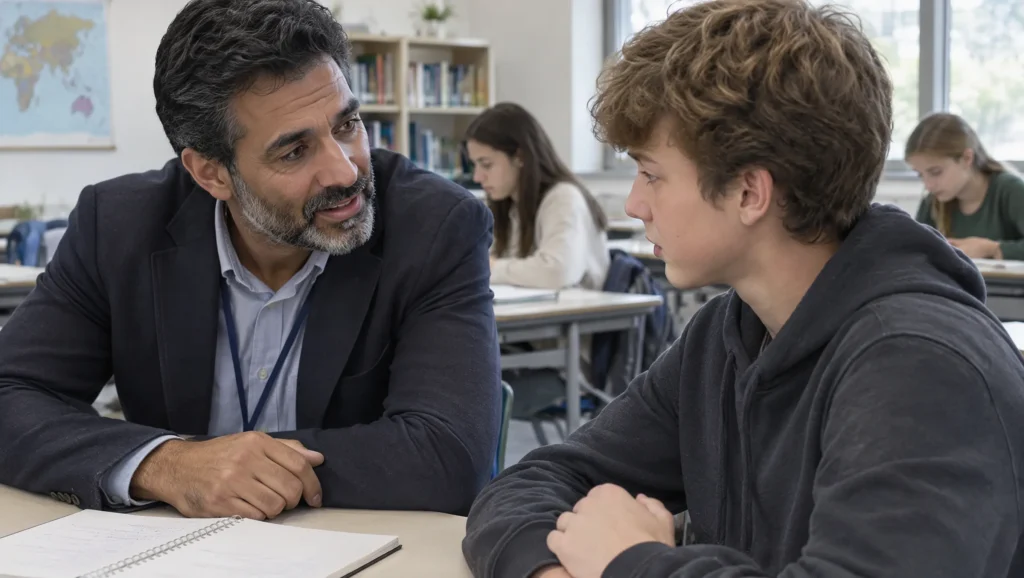
7. Build a Relationship in Which Students Feel Safe
Students learn better when they feel respected, supported, and comfortable asking for help.
If students believe that every mistake will lead to criticism or humiliation, they may hide their difficulties, avoid asking questions, or pretend to understand lessons they have not understood.
You can make a difference through simple daily actions: greeting students warmly, listening to their concerns, appreciating their efforts, encouraging questions, and treating them fairly.
Practical Tip: Make time for short conversations with students. Notice when a normally active child becomes unusually quiet or when a struggling student begins making progress. Let students know that they can approach you when they need guidance.
You may not be able to solve every problem a child faces, but you can create a classroom where students feel comfortable seeking help. When a concern goes beyond your role, involve the appropriate school staff and family members.
Sometimes, the most important thing a teacher can offer is the reassurance that a child does not have to face every difficulty alone.
Ask yourself:
- Do my students feel comfortable asking questions when they do not understand a lesson?
- Do I notice changes in students’ behaviour, participation, or emotional well-being?
- Do I make time to listen to students who appear worried, withdrawn, or discouraged?
- Do I treat every student with respect, regardless of academic ability, family background, or behaviour?
- Do my students know that they can approach me for guidance without fear of humiliation?
Conclusion
Finally, correcting students is an important part of teaching, but understanding them makes that correction more meaningful.
When you understand the reasons behind a child’s behaviour, you can respond more thoughtfully. When you listen before judging, you build trust. When you correct mistakes without humiliating students, you encourage them to learn. And when you recognise individual differences, you help every child move towards improvement.
Good teachers correct what students do wrong. Great teachers try to understand why it happened and guide them towards doing better.
As a teacher, remember that your responsibility is not simply to maintain discipline or complete the syllabus. You are also helping young people develop confidence, character, responsibility, and the ability to learn from their mistakes.
Before correcting a student, take a moment to reflect on these five questions:
- Am I responding to the actual problem or merely reacting to the behaviour?
- Have I listened to the student before reaching a conclusion?
- Will my response help the student learn, improve, and take responsibility?
- Am I maintaining discipline while protecting the student’s dignity?
- What can I do differently to help this child succeed?
Your answer may change not only the way you.
FAQs
1. Why should teachers understand student behaviour before correcting it?
Understanding student behaviour helps teachers identify possible causes of difficulties and choose appropriate, supportive responses rather than relying only on punishment.
2. How can teachers correct students without hurting their feelings?
Teachers can correct mistakes privately when appropriate, use respectful language, explain expectations clearly, and focus on the behaviour rather than labelling the child.
3. What is positive discipline in the classroom?
Positive discipline combines clear expectations, consistent boundaries, respectful correction, and guidance that helps students develop responsibility and self-control.
4. How can teachers manage disruptive student behaviour?
Teachers can observe behaviour patterns, identify possible triggers, communicate expectations, speak privately with students, and apply fair, consistent consequences.
5. How can teachers build trust with students?
Teachers can build trust by listening patiently, treating students fairly, appreciating effort, encouraging questions, and creating a classroom where mistakes are treated as opportunities to learn.
You may like to read:-
- Before You Correct a Child, Understand Their Behavior
- 15 Daily Reflection Questions for Modern School Principals
- What Makes a Great Principal? | 10 Must-Have Qualities | Part:2 Strong Communication Skills
- What Makes a Great Principal? | 10 Characteristics | Part:1 Visionary Leadership in School Principals
- 15 Things Every School Principal Should Check Every Day
Quite educative n essential n effective information for we like Principal….who are striving n struggling for the betterment of Schools…
Your suggestion is our energy.
I am a teacher.so your article is very useful for me.
I will like to know about how a principal can really manage an institution well


Educational & Management Expert, Accredited Teacher & Soft Skills trainer,Certified Counselor,Writer, and Author

There are important techniques to practice for all educators. Appreciate for sharing it.