
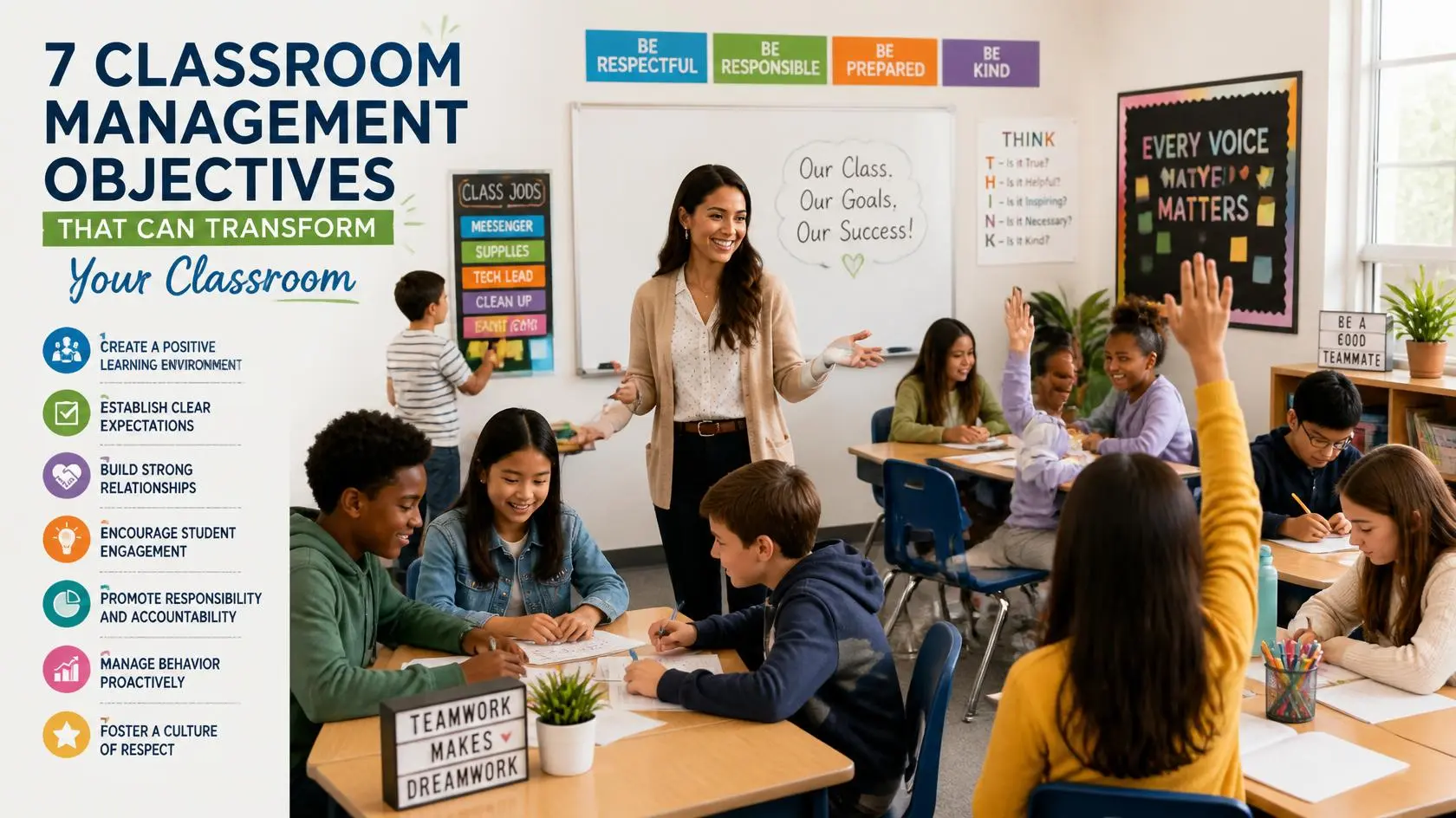
Classroom management refers to all positive behaviour and decisions made by teachers to help their students’ learning process. It includes all the activities required to create and maintain an orderly learning environment, such as material planning, preparation, and classroom organization. Along with providing a context for learning, the classroom setting also affects the mood of the group, students’ attitudes and feelings, and the social dynamics of the learning process. Understanding classroom management objectives helps teachers create a positive environment where students can learn effectively.
Effective classroom management establishes routines and rules in the classroom. Classroom disciplinary issues can have a significant impact on the effectiveness of teaching and learning in a school. Effective classroom management requires patience, good timing, and the establishment of appropriate boundaries. Promoting clear rules and boundaries can provide children with the guidance and confidence they need to succeed in school.
The following are the objectives of classroom management.
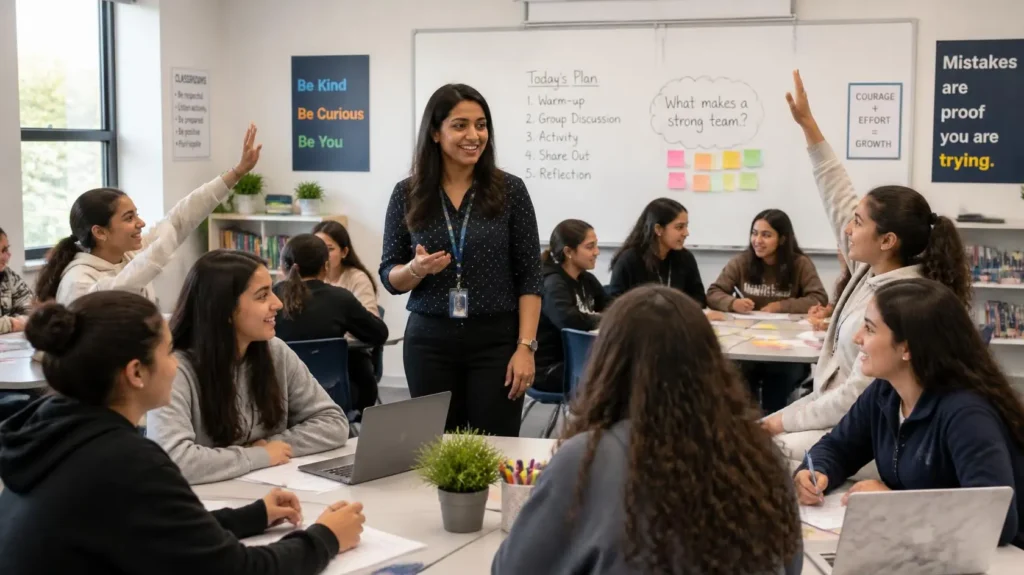
1.You Create a Positive Learning Environment
Students’ engagement, motivation, and interest should be maintained by effective classroom management. It’s crucial that kids have access to a classroom where they can learn effectively. Students learn better when they enter a classroom that is organised, welcoming, and positive. Your classroom environment can influence their interest, attitude, participation, and behaviour.
You can begin the day with a positive greeting, display students’ work, establish simple routines, and encourage respectful communication. These small actions can make your classroom feel more welcoming.
A positive classroom does not mean a classroom without rules. It means a classroom where rules support learning rather than simply controls students.
2. You Support Academic Achievement
Teachers foster student achievement by setting high expectations and informing students about the acceptable level of behaviour in the classroom. This is accomplished through ongoing encouragement, positive study groups, and classroom rules. Meeting with students and parents will assist in establishing expectations.
You know, classroom management and academic achievement are closely connected. When students understand classroom expectations and routines, they can concentrate better on their learning.
You can support academic success by setting clear expectations, providing timely feedback, encouraging students to participate, and creating opportunities for them to work together.

3. You Build a Safe Classroom Community
We can allow students to connect with each other for the purpose of learning. In the classroom, each student should feel safe to discuss academic issues. Rules and routines can help students feel comfortable enough to work on intellectual tasks in the classroom. It provides a framework for students to interact with one another.
Every student wants to feel safe in the classroom. They should be able to ask questions, share ideas, make mistakes, and express their opinions without fear of being laughed at or humiliated. Your classroom should become a community where students respect one another and feel that they belong. When students feel emotionally safe, they become more willing to participate.
4. You establish clear rules and routines for your students.
In the classroom, it facilitates the development of a rule-based learning environment. By fostering respect and upholding strict standards for individual and group behaviours, a set of rules encourages tolerance of fellow students and instructors.
To maintain positive discipline, rules should be put into place regarding sharing of materials, speaking in class, raising hands, cleaning, use of polite language, and finishing class work and homework within the allotted time.
Rules should not simply restrict students. Good rules help students develop responsibility and self-discipline.
5. You Encourage Active Participation
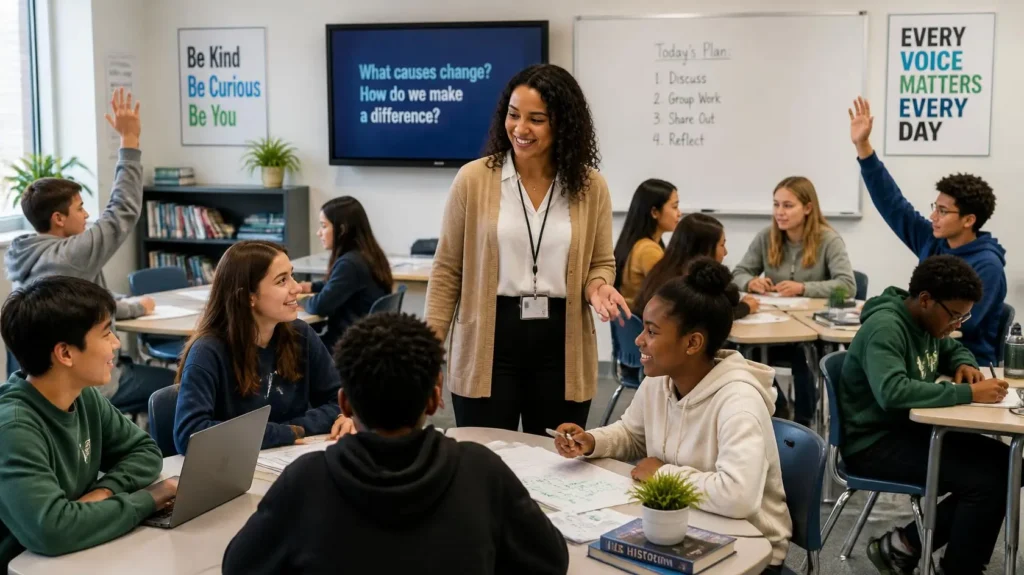
Effective classroom management should encourage students to become active participants in the learning process rather than passive listeners. Teachers can use group activities, discussions, projects, technology, peer learning, and interactive teaching strategies to keep students involved.
Today’s learners have different interests, learning styles, attention spans, and digital experiences. A well-managed classroom provides opportunities for students to ask questions, share ideas, collaborate with classmates, and take responsibility for their own learning.
6. You Develop Responsible Behaviour
Your classroom is also a place where students learn how to communicate, cooperate, manage emotions, solve conflicts, and respect others. You should guide students to take responsibility for their actions. These skills help them not only in school but also in life.
Modern classroom management should also support students’ social and emotional development. Students need to learn how to communicate respectfully, manage their emotions, solve conflicts, cooperate with others, and take responsibility for their actions.
Teachers can promote these skills by encouraging empathy, respectful communication, teamwork, self-discipline, and positive relationships. A classroom that supports both academic learning and emotional well-being helps students become more confident and responsible individuals.
7. You Build Positive Teacher-Student Relationships
You know, students respond better to teachers they trust. You must listen to your students, appreciate their efforts, correct mistakes respectfully, and show genuine care. A few encouraging words can change a student’s attitude towards learning.
A strong teacher-student relationship is one of the most powerful foundations of effective classroom management. Students are more likely to listen, cooperate, and participate when they feel that their teacher genuinely cares about them.
You must learn your students’ names and listen to their concerns. You should appreciate their efforts and correct their mistakes respectfully. You can celebrate their progress, not just their marks.
Conclusion
Classroom management is not controlling students. It is creating a safe, positive, engaging, and purposeful classroom where every student can learn and grow. Good classroom management improves learning. Great classroom management transforms learning
FAQs
1. What are the objectives of classroom management?
The main objectives are to create a positive learning environment, support academic achievement, maintain safety, establish clear routines, encourage participation, develop responsible behaviour, and build positive teacher-student relationships.
2. Why is classroom management important?
Effective classroom management creates an organised and supportive environment where students can concentrate, participate actively, and achieve better learning outcomes.
3. How can teachers improve classroom management?
Teachers can improve classroom management by establishing clear rules, maintaining consistent routines, encouraging positive behaviour, communicating respectfully, and building strong relationships with students.
4. What makes classroom management effective?
Clear expectations, consistent routines, positive relationships, active student engagement, and respectful discipline are key elements of effective classroom management.
5. Is classroom management about controlling students?
No. Good classroom management is about creating a safe, positive, engaging, and purposeful environment where students can learn and grow.
You may like to read:-
- 7 Classroom Management Objectives That Can Transform Your Classroom
- Gen Y, Gen Z & Gen Alpha: Do You Really Understand Your Learners?
- How to Be an Effective Teacher: 21 Habits of Highly Effective Teachers
- Good teachers focus on marks; Great teachers focus on growth.
- Teaching Gen Z Students: What Has Changed?
Sir your content is reflected on real classroom situation.
Hello Sir, This is a powerful and so meaningful message. As head of a secondary school, this is a philosophy…
We will follow it…
Thank you very much for you advice that gave an important information towards good teacher and preparation of lesson plan.…



This is wonderful. This report is fantastic.