
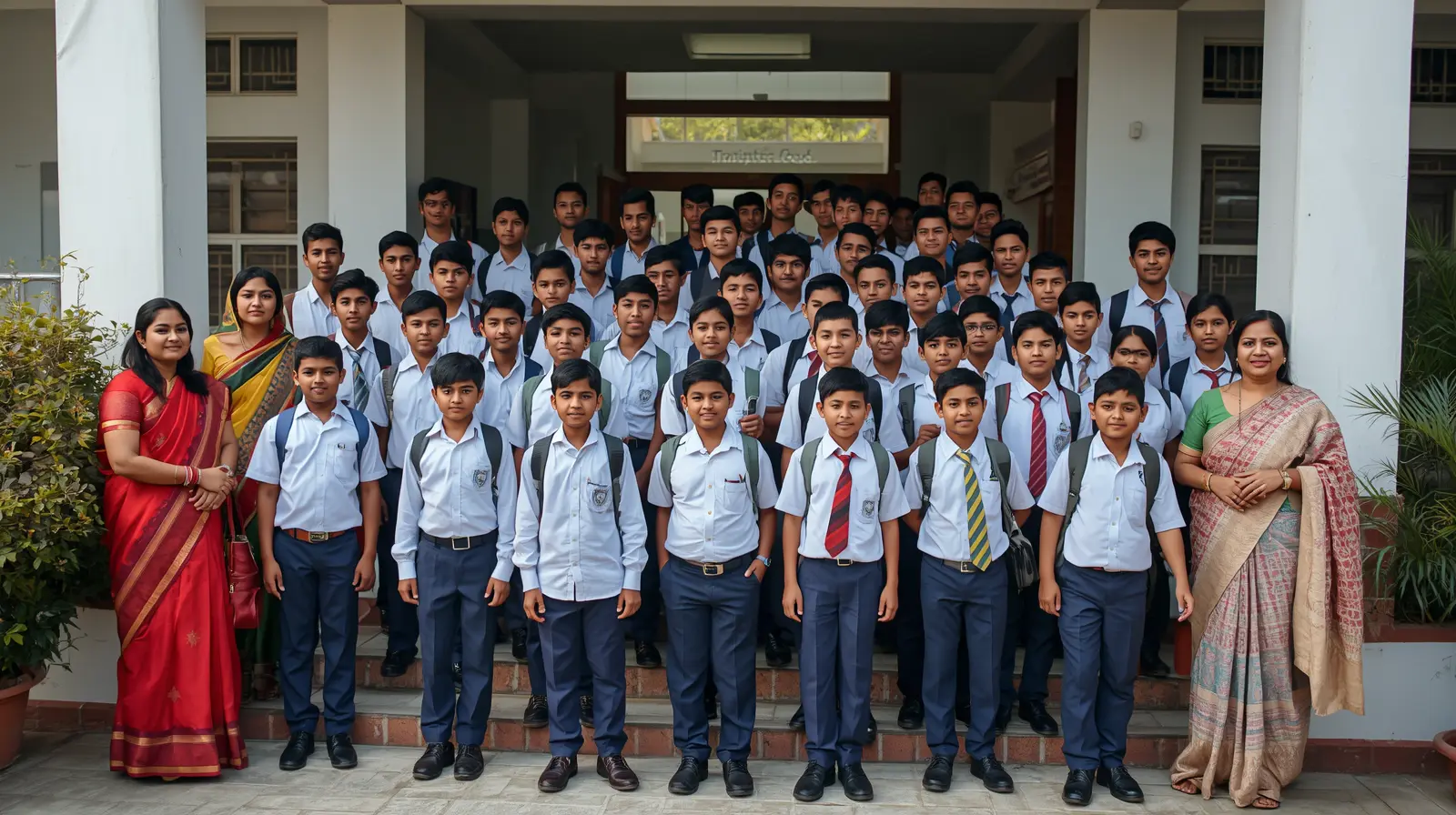
India has one of the largest school education systems in the world. Millions of children enter classrooms every year with dreams, aspirations and expectations. Millions of teachers work every day to shape their futures. Yet, behind these impressive numbers lies an important question: Are we providing every child with the quality of education needed to succeed in life?
The Unified District Information System for Education Plus (UDISE+) 2024–25 Report, published by the Ministry of Education, Government of India, provides valuable insights into the present condition of school education in our country.
The report presents information about schools, student enrolment, teachers, gender representation, educational infrastructure, accessibility and several other important indicators. It is more than a collection of statistics. It is an opportunity for policymakers, school leaders, teachers and parents to understand where Indian education stands and what needs to improve.
Let us explore some of its significant findings and understand what they mean for the future of our schools.
1. India’s School Education System: A Massive Responsibility
According to the UDISE+ 2024–25 Report, India has:
- 14,71,473 schools
- 24.69 crore student enrolments
- 1,01,22,420 teachers
These figures demonstrate the enormous scale of India’s school education system.
The country has crossed the milestone of one crore teachers for the first time since the beginning of UDISE+. This is an encouraging development because teachers are the foundation of every successful education system.
However, the number of schools, students and teachers alone cannot determine the quality of education. We must also consider what students learn, how effectively teachers teach and whether schools provide an environment that supports every child’s development.
A school should not be judged merely by its buildings, enrollment figures or examination results. Its real achievement lies in the learning, confidence, values and abilities developed by its students.
2. Student Enrollment: Reaching Every Child
The report records approximately 24.69 crore students from pre-primary to higher secondary education.
The distribution of enrolment across educational stages is significant:
| Educational level | Enrolment |
| Pre-primary | 1.40 crore |
| Primary | 10.44 crore |
| Upper Primary | 6.37 crore |
| Secondary | 3.72 crore |
| Higher Secondary | 2.76 crore |
One important observation is the declining number of students as we move towards higher educational levels.
Although several factors influence these differences, the figures remind us that continuing education beyond primary and middle school remains an important challenge.
A child entering Class I should have the opportunity to complete Class XII and pursue higher education without unnecessary interruptions.
School leaders must therefore pay particular attention to student attendance, academic progress, parental engagement and retention.
Enrolment brings a child into school, but meaningful education keeps that child learning.
3. The Enrollment Challenge in Madhya Pradesh
The report offers an important observation for Madhya Pradesh.
The Gross Enrolment Ratio (GER) in the state is:
| Educational level | Madhya Pradesh |
| Primary | 76% |
| Upper Primary | 82% |
| Secondary | 68% |
| Higher Secondary | 45% |
These figures deserve serious attention.
The higher secondary GER of 45% is particularly concerning. It indicates that enrolment at this stage remains considerably below the population in the corresponding age group.
For school leaders, this raises several questions:
- Why do some students discontinue their education after primary or middle school?
- Are financial difficulties affecting their continuation?
- Are schools sufficiently prepared to support students during the transition to secondary education?
- Are students receiving adequate academic guidance and career counselling?
- Are parents aware of the long-term benefits of completing school education?
In districts such as Jhabua, where educational institutions serve communities with diverse social and economic backgrounds, these questions are especially important.
We must create an educational environment in which children are encouraged and supported to complete their schooling.
4. Teachers: The Strength of the Education System
One of the most encouraging findings of the report is that India has crossed the one-crore mark in teacher numbers.
The country recorded 1,01,22,420 teachers during 2024–25.
The report also highlights the importance of the Pupil-Teacher Ratio (PTR).
| Educational level | National PTR |
| Primary | 20:1 |
| Upper Primary | 17:1 |
| Secondary | 21:1 |
| Higher Secondary | 24:1 |
The recommended PTR under the Right to Education framework and NEP-related provisions is generally 30:1 at these levels.
A reasonable teacher-student ratio creates opportunities for individual attention, classroom interaction and better academic support.
However, a favourable PTR does not automatically guarantee effective teaching.
A classroom with fewer students can still produce poor learning outcomes if teaching methods are not engaging or students do not receive sufficient guidance.
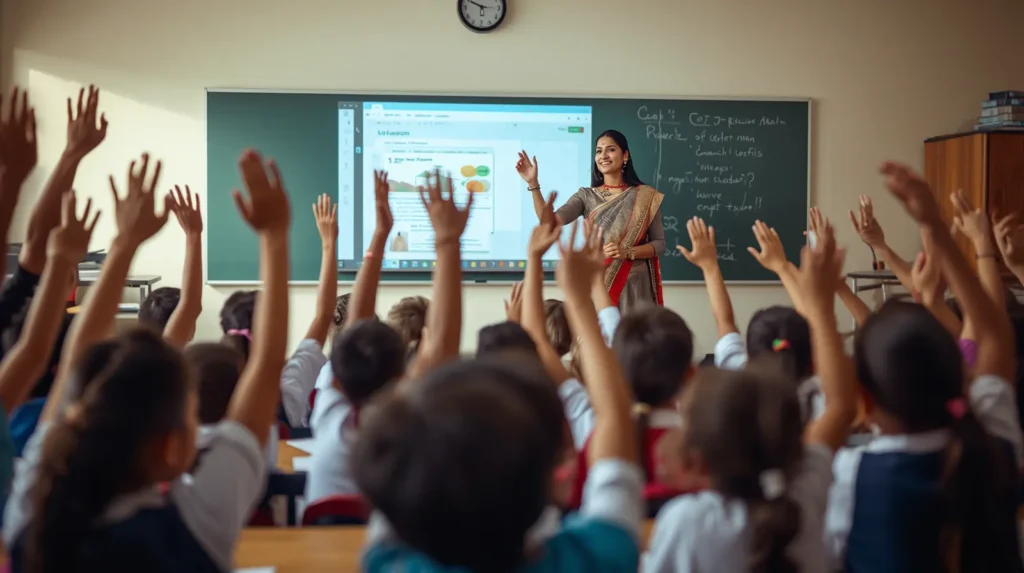
Every teacher must understand that teaching is not simply completing the syllabus. It involves identifying learning gaps, encouraging curiosity, developing communication skills and ensuring that every student progresses.
Professional development programmes, classroom observations, collaborative learning and regular teacher training should become essential components of school improvement.
5. Girls’ Education: An Encouraging Development
Gender equality is an important indicator of educational progress.
According to UDISE+ 2024–25, girls account for approximately 48.3% of total student enrolment in India.
The report also indicates that the Gender Parity Index is above one at all educational levels. This suggests proportionally higher participation by girls compared with boys when measured through the Gross Enrolment Ratio.
This is an encouraging development.
It reflects the contribution of government initiatives, awareness programmes, parental support and the increasing recognition of girls’ education.
However, enrolment is only one part of the journey.
We must also ensure that girls have:
- Safe and supportive school environments.
- Functional and hygienic toilet facilities.
- Equal opportunities in sports and extracurricular activities.
- Access to science, technology and digital education.
- Leadership opportunities and career guidance.
- Freedom from discrimination and gender-based stereotypes.
A girl who receives quality education becomes better equipped to make informed decisions, contribute to society and participate in nation-building.
6. School Infrastructure: Progress and Remaining Gaps
A good school environment supports effective teaching and learning.
The UDISE+ report provides useful information about the availability of basic facilities across Indian schools.
National school infrastructure indicators, 2024–25
| Facility | Schools with facility |
| Drinking water | 99.3% |
| Girls’ toilets | 97.3% |
| Boys’ toilets | 96.2% |
| Handwashing facilities | 95.9% |
| Electricity | 93.6% |
| Libraries | 89.5% |
| Playgrounds | 83.0% |
| Medical check-ups | 75.5% |
| Computers | 64.7% |
| Internet | 63.5% |
| Ramps with handrails | 54.9% |
| CWSN-friendly toilets | 35.6% |
| Solar panels | 10.8% |
The availability of drinking water, toilets and electricity in a large proportion of schools is a positive achievement.
However, the figures also reveal important gaps.
For example, only 64.7% of schools have computer facilities, while 63.5% have internet access.
This means that a significant proportion of schools still lack the digital infrastructure required to provide technology-supported learning.
Similarly, only 35.6% of schools have CWSN-friendly toilets. This raises concerns about accessibility and the participation of children with special needs.
A school should be accessible to every child, irrespective of physical ability or personal circumstances.
Infrastructure development must therefore go beyond constructing buildings. Schools need functional facilities, regular maintenance, accessible classrooms, safe drinking water, clean toilets, libraries, laboratories and playgrounds.
A school building creates space for education, but a supportive school environment creates opportunities for learning.
7. Student Dropout: The Challenge We Cannot Ignore
Perhaps one of the most important findings of the report concerns student dropout.
The national dropout rates for 2024–25 are:
| Educational level | Dropout rate |
| Primary (Classes I–V) | 0.3% |
| Upper Primary (Classes VI–VIII) | 3.5% |
| Secondary (Classes IX–X) | 11.5% |
The difference between primary and secondary dropout rates is significant.
While most children continue through primary education, the transition towards secondary education presents greater challenges.
The situation in Madhya Pradesh requires particular attention.
- Primary dropout: 0%
- Upper Primary dropout: 6.3%
- Secondary dropout: 16.8%
The secondary dropout rate in Madhya Pradesh is considerably higher than the national average.
What happens to these students? What prevents them from continuing their education?
The reasons may include economic difficulties, family responsibilities, migration, lack of academic support, inadequate access to secondary schools and other social circumstances.
Every school should develop a systematic student-retention strategy.
What can school leaders do?
- Monitor student attendance regularly.
- Contact parents when students remain absent for several days.
- Identify students experiencing academic difficulties.
- Provide remedial teaching and individual attention.
- Conduct counselling sessions for students and parents.
- Encourage students through recognition and appreciation.
- Maintain communication with families to identify difficulties early.
A student who leaves school should never become just another entry in a dropout report. Every such case deserves attention, understanding and appropriate intervention.
8. Digital Education: Preparing Students for Tomorrow
Technology is transforming the way people learn, communicate and work.
Digital education is no longer an additional facility that schools can consider optional. It is becoming an important part of educational development.
However, the UDISE+ findings reveal that only 64.7% of schools have computer facilities and 63.5% have internet connectivity.
This indicates that many schools still need substantial improvements in digital infrastructure.
But providing computers alone is not enough.
Teachers must know how to use technology meaningfully in their classrooms.
For example:
- Use educational videos to explain difficult concepts.
- Introduce interactive digital activities.
- Encourage students to develop basic computer skills.
- Use digital resources for research and projects.
- Teach students responsible internet usage.
- Introduce age-appropriate AI awareness and digital literacy.
Schools must also ensure that technology supports teachers rather than replacing meaningful human interaction.
The future classroom should combine effective teaching, practical activities, digital resources and independent thinking.
9. Inclusive Education: Every Child Deserves an Opportunity
India’s school education system serves children from different social, economic, linguistic and physical backgrounds.
The report records approximately 21.49 lakh students with special needs (CWSN).
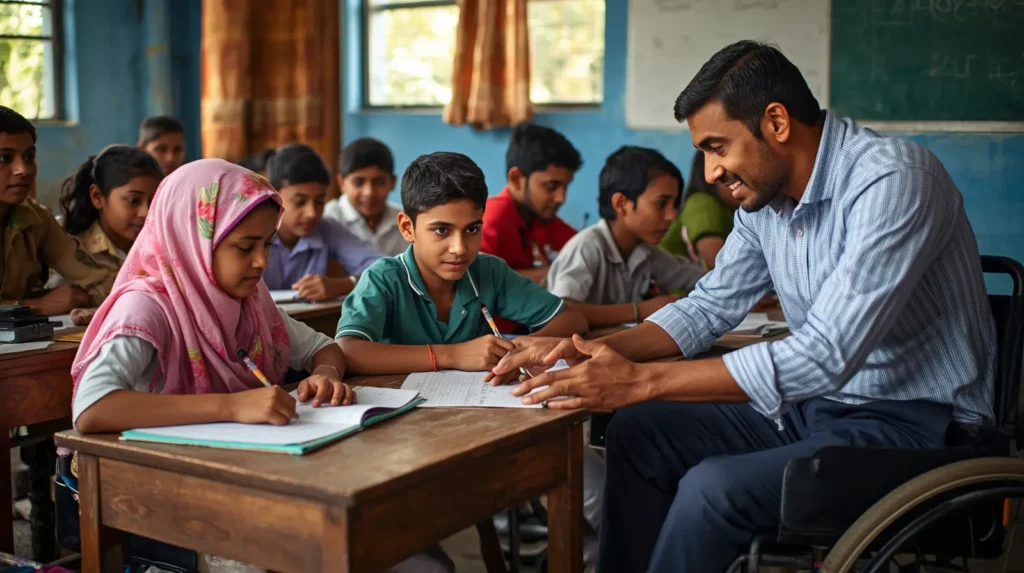
This reminds us of our responsibility to create inclusive learning environments.
Yet, the availability of CWSN-friendly toilets in only 35.6% of schools indicates that significant improvements are necessary.
Inclusive education should not remain limited to government policies or official documents.
It must become a daily practice in every classroom.
Teachers should adapt their teaching methods according to students’ individual needs. School management should provide accessible facilities, appropriate learning materials and a supportive atmosphere.
A child with special needs should never feel that the school is designed for everyone except them.
The true success of education lies in ensuring that every child receives an opportunity to learn, participate and grow.
10. What Should School Principals and Teachers Learn from This Report?
Statistics become meaningful only when they lead to action.
The UDISE+ 2024–25 Report should encourage every principal to examine the functioning of their institution beyond academic results and annual examinations.
Here are seven important priorities for school leaders:
1. Focus on foundational literacy and numeracy.
Every child must develop the ability to read with understanding, write effectively and perform basic mathematical operations.
2. Monitor individual student progress.
Identify learning gaps through regular assessments and provide timely remedial support.
3. Strengthen teacher development.
Organise practical training programmes, encourage peer learning and promote innovative classroom practices.
4. Improve student retention.
Monitor attendance, identify students at risk of discontinuing education and establish strong parent-school communication.
5. Create inclusive classrooms.
Ensure that children from different backgrounds and with different learning needs receive equal opportunities.
6. Strengthen digital literacy.
Provide teachers and students with meaningful opportunities to use technology for learning.
7. Build a positive school culture.
Promote discipline, respect, communication, emotional well-being, creativity and student participation.
A principal must understand that school improvement is not a one-time activity. It is a continuous process involving teachers, students, parents, management and the community.
11. From Data to Action: The Road Ahead
The UDISE+ report provides a valuable foundation for understanding the progress and challenges of Indian school education. However, we must remember that educational development cannot be measured through enrolment, infrastructure and teacher numbers alone.
We must also examine what students actually learn.
Are children reading confidently? Can they communicate effectively? Are they developing critical thinking and problem-solving abilities? Can they apply classroom knowledge to real-life situations?
These questions deserve as much attention as infrastructure and enrolment statistics.
The National Education Policy 2020 envisions a more holistic, flexible, inclusive and skill-oriented education system. Achieving this vision requires coordinated efforts at every level.
The government must strengthen educational infrastructure and ensure equitable access. School managements must create supportive learning environments. Principals must provide effective academic leadership. Teachers must continuously improve their teaching practices. Parents must actively participate in their children’s education.
Most importantly, students must become active participants in their own learning.
Conclusion: The Future of Education Begins in Our Classrooms
The UDISE+ 2024–25 Report presents two important realities.
First, India has made considerable progress in expanding its school education system. We have more than 14.71 lakh schools, 24.69 crore student enrolments and over one crore teachers.
Second, challenges remain in secondary education participation, student retention, digital accessibility, inclusive infrastructure and equitable educational opportunities.
For me, as an educator and school principal with more than two decades of experience, the most important message from this report is that the success of education must ultimately be measured by the progress of every individual child.
We should not be satisfied merely because a child is enrolled in our school. We should ensure that the child learns, develops confidence, acquires essential skills and becomes capable of facing the challenges of life.
Let us move beyond the traditional understanding of education as completing textbooks and preparing students for examinations.
Let us build schools where children enjoy learning, teachers feel respected, parents feel confident and every student receives the opportunity to discover their potential.
Because the future of India is not shaped by statistics alone. It is shaped every day in our classrooms.
Every child counted in the education system deserves to be a child who learns, grows and succeeds.
Frequently Asked Questions (FAQs)
1. What is the UDISE+ 2024–25 Report?
The UDISE+ 2024–25 Report is an official publication of the Ministry of Education, Government of India. It provides comprehensive data about Indian schools, including student enrolment, teachers, infrastructure, gender representation and dropout rates.
2. How many schools are there in India according to the UDISE+ 2024–25 Report?
According to the report, India has 14,71,473 schools, with approximately 24.69 crore student enrolments and 1,01,22,420 teachers.
3. What is the student dropout rate in India according to UDISE+ 2024–25?
The national dropout rates are 0.3% at the primary level, 3.5% at the upper primary level and 11.5% at the secondary level.
4. What are the major infrastructure challenges in Indian schools?
Important challenges include limited computer and internet facilities, inadequate accessibility for children with special needs, and gaps in playgrounds, medical facilities and other essential infrastructure.
5. What can school principals and teachers do to improve the quality of education?
School principals and teachers can improve educational quality by strengthening foundational literacy and numeracy, monitoring student progress, providing remedial teaching, improving teacher training, encouraging digital learning and creating inclusive, student-friendly classrooms.
Official source and reference
The article is based on the Government of India’s UDISE+ 2024–25 report, published by the Department of School Education & Literacy, Ministry of Education
UDISE+ 2024–25 report, published by the Department of School Education
Editorial note: UDISE+ is primarily an administrative education database. Its enrolment, infrastructure and retention indicators should not be interpreted as direct measurements of student learning outcomes. The report also cautions that some indicators are not strictly comparable with data collected before 2022–23 because the student-level data collection system changed.
This article interprets the national report and selected Madhya Pradesh indicators for educators and school leaders. It is an educational analysis, not a verbatim reproduction of the report.
You may like to read:-
- UDISE+ 2024–25 Report: Indian School Education and Its Future
- 10 Things That Can Quietly Damage a School’s Reputation
- Who Takes Care of Teachers? Teacher Well-being and School Leadership
- The Child You Call Weak Today, May Surprise You Tomorrow
- What Makes a Teacher Truly Exceptional? 9 Essential Responsibilities
Quite educative n essential n effective information for we like Principal….who are striving n struggling for the betterment of Schools…
Your suggestion is our energy.
I am a teacher.so your article is very useful for me.
I will like to know about how a principal can really manage an institution well


Educational & Management Expert, Accredited Teacher & Soft Skills trainer,Certified Counselor,Writer, and Author


There are important techniques to practice for all educators. Appreciate for sharing it.