
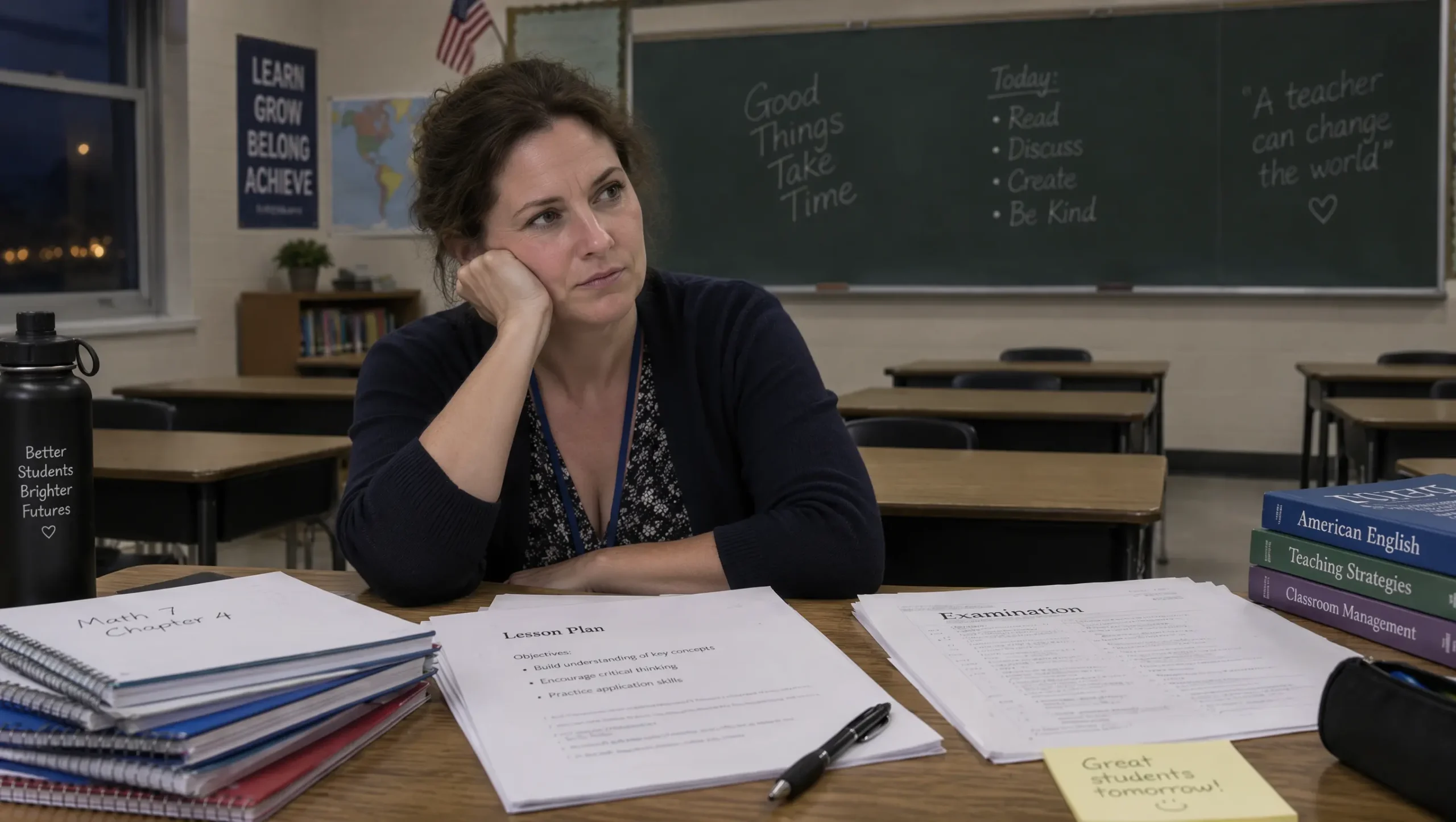
An important reflection on teacher well-being, professional respect and the responsibility of school leadership
With more than 20 years of experience in education, teaching, teacher training and school leadership, I have come to understand one important reality. Teachers play an extraordinary role in shaping the lives of students, but their own professional and personal well-being sometimes receives insufficient attention.
A teacher enters the classroom every morning carrying much more than a textbook. There are lessons to prepare, students to guide, doubts to clarify, examinations to conduct, notebooks to correct, records to maintain and parents to communicate with.
Some teachers also take responsibility for school assemblies, competitions, celebrations, discipline, examination arrangements and numerous administrative assignments.
They are expected to remain patient, approachable, enthusiastic and committed throughout the day.
But have we ever stopped to ask a simple question?
Who takes care of the teacher who takes care of everyone?
A teacher may encourage a student who has lost confidence, listen to a child’s personal concerns, support a struggling learner and motivate an entire classroom. Yet that same teacher may sometimes return home feeling exhausted, unappreciated or professionally discouraged.
This is an important subject that every principal, school administrator and management team should reflect upon.
1. Teachers Need Appreciation, Not Just Additional Responsibilities
In many schools, teachers receive instructions about what needs to be completed, which duties need attention and which targets must be achieved.
However, how often do they receive genuine appreciation for what they have already accomplished?
Consider this situation.
A teacher spends additional time helping a student improve reading skills. The student gradually develops confidence and starts participating in classroom activities. However, nobody acknowledges the teacher’s additional effort because the student’s overall examination marks have not changed significantly.
Does this mean the teacher’s effort has no value?
Certainly not.
Educational progress cannot always be measured through examination marks. Sometimes, a student’s improved confidence, better behaviour, willingness to ask questions or ability to read independently represents a significant achievement.
What can school leaders do?
- Appreciate teachers for genuine efforts and improvements.
- Recognize classroom innovation and student progress.
- Offer specific and meaningful words of encouragement.
- Celebrate teamwork rather than focusing exclusively on individual rankings.
A simple statement such as “I noticed the effort you made to help that student” can make a teacher feel valued.
2. Respect Teachers’ Personal Time
Teaching is not a profession that ends when the final bell rings.
Teachers often carry unfinished work home. They prepare lessons, correct notebooks, evaluate answer sheets, complete records and plan classroom activities.
In addition, unexpected meetings, repeated instructions and administrative assignments may extend their working day.
Consider a teacher who regularly stays after school to complete examination-related work. Over time, the additional responsibilities become an expectation rather than an occasional requirement.
This can affect family time, personal responsibilities and professional enthusiasm.
School management must understand that teachers need a reasonable balance between professional duties and personal life.
Practical solutions:
- Plan meetings in advance.
- Avoid unnecessary after-school meetings.
- Reduce repetitive paperwork through digital tools.
- Distribute additional responsibilities fairly.
- Respect officially approved leave and working hours.
- Ensure that urgent additional duties are reasonable and properly communicated.
Commitment is important, but commitment should not become an excuse for ignoring personal boundaries.
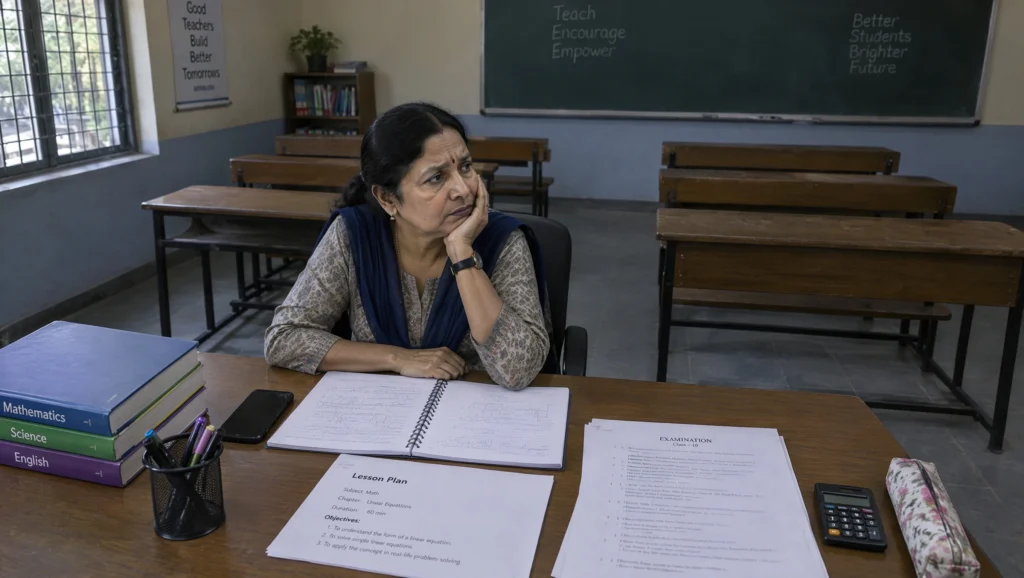
3. Give Teachers an Opportunity to Express Their Concerns
One of the most important responsibilities of a principal is to create an environment where teachers can communicate openly.
Unfortunately, some teachers hesitate to express their genuine concerns.
They may fear being misunderstood, criticised or labelled as uncooperative.
For example, a teacher may be handling several responsibilities simultaneously and may genuinely need assistance. However, instead of communicating the difficulty, the teacher silently continues working under pressure.
Over time, this can affect motivation and classroom performance.
A supportive principal should create opportunities for meaningful conversations.
Try this simple practice:
Arrange a short individual meeting with each teacher periodically. Ask three questions:
- What is going well in your classroom?
- What professional difficulty are you currently facing?
- What support would help you perform better?
Listen carefully before offering solutions.
Not every concern requires an immediate decision. Sometimes, giving someone an opportunity to speak without interruption is the first step towards solving the problem.
4. Ensure Fairness in the Distribution of Duties
Teachers are often assigned responsibilities beyond regular classroom teaching.
These may include examination duties, event coordination, discipline management, documentation, admission activities and other school assignments.
The problem arises when additional responsibilities repeatedly fall on the same teachers.
For instance, one teacher may be coordinating several school activities while another has relatively fewer additional duties.
Even if the distribution is not intentional, such situations can create dissatisfaction.
School leaders should periodically review the distribution of responsibilities.
A practical approach:
- Prepare a transparent duty allocation plan.
- Consider teachers’ existing workloads.
- Rotate additional responsibilities wherever appropriate.
- Discuss major changes before implementation.
- Provide clear instructions and reasonable timelines.
- Evaluate contributions fairly.
Fairness does not necessarily mean giving everyone exactly the same responsibility. It means ensuring that duties are distributed reasonably, transparently and without favouritism.
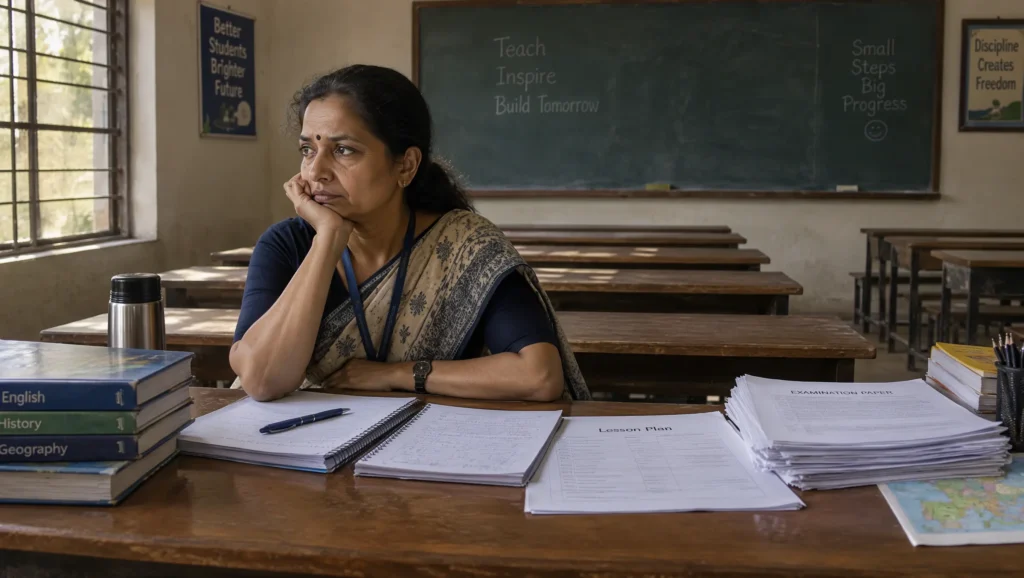
5. Provide Constructive Feedback Instead of Constant Criticism
Teachers need professional guidance to improve their teaching practices.
Classroom observations, academic reviews and performance discussions are essential. However, the way feedback is communicated makes a significant difference.
Imagine a teacher conducting a lesson that does not produce the expected learning outcome.
A principal could publicly criticise the teacher in front of colleagues.
Alternatively, the principal could have a private conversation:
“I appreciate your effort. Let us discuss how we can make this lesson more engaging for students. Perhaps we can try another teaching strategy next time.”
Both situations address the same professional concern, but their impact on the teacher may be very different.
Remember these principles:
- Correct privately whenever possible.
- Appreciate genuine efforts publicly.
- Focus on improvement rather than humiliation.
- Offer practical suggestions.
- Provide opportunities to practise and improve.
A teacher who feels respected is more likely to accept constructive feedback positively.
6. Invest in Teachers’ Professional Growth
Students are expected to learn continuously. Teachers should also receive opportunities to learn, update their knowledge and develop new skills.
Educational approaches, classroom technologies, student expectations and assessment methods continue to evolve.
However, professional development should not become another burden added to an already demanding schedule.
Schools should create meaningful opportunities for teachers to grow.
For example:
- Organize short, practical training sessions.
- Encourage teachers to share successful classroom practices.
- Introduce peer learning and mentoring.
- Provide opportunities to explore educational technology and AI tools.
- Encourage participation in workshops and professional development programs.
A teacher who continues learning brings fresh ideas, confidence and enthusiasm into the classroom.
7. Understand That Teachers Have Emotions Too
Teachers are expected to manage students’ emotions, understand parents’ concerns and maintain discipline.
But teachers also experience disappointment, stress, personal difficulties and professional uncertainty.
A teacher may be going through a difficult family situation. Another may be worried about a personal responsibility. Someone else may simply be feeling professionally exhausted.
We cannot expect every teacher to be cheerful and energetic every day.
School leaders should develop a culture where seeking support is not considered a weakness.
A simple conversation, a supportive colleague, a reasonable adjustment in responsibilities or an opportunity to take approved leave can make a meaningful difference.
A supportive school does not expect teachers to hide every personal difficulty. It creates an environment where they can seek appropriate support with dignity.
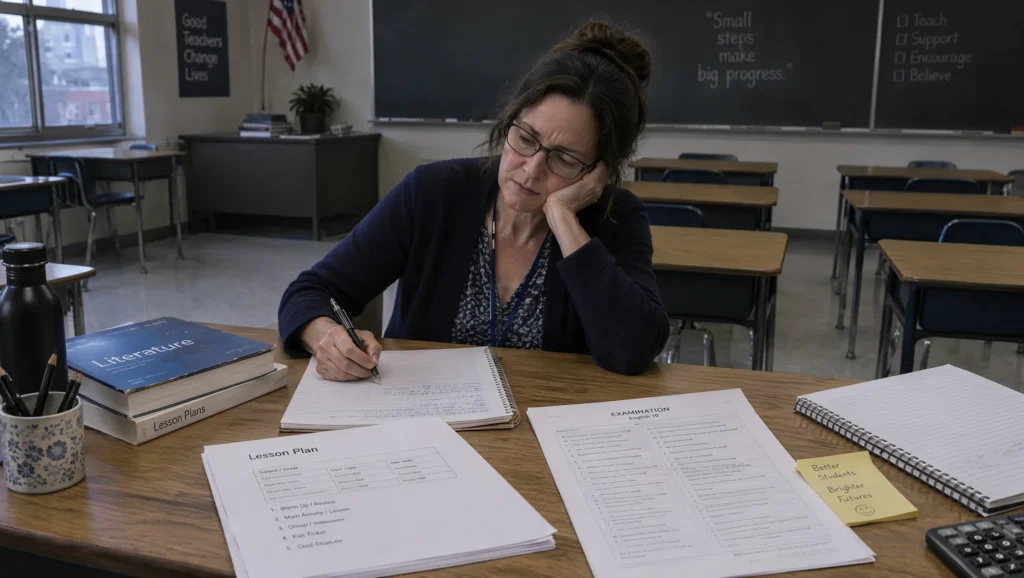
8. What Can Every School Do? A Practical 30-Day Action Plan
Understanding teacher well-being is important, but meaningful improvement requires action.
Here is a simple 30-day plan that every school principal and management team can introduce.
Week 1: Listen and Understand
- Conduct confidential individual conversations with teachers.
- Identify major workload-related concerns.
- Ask teachers what support they need.
- Review existing responsibilities and meeting schedules.
Expected outcome: A clearer understanding of teachers’ professional needs.
Week 2: Review and Improve
- Examine the distribution of additional duties.
- Identify unnecessary paperwork and repetitive tasks.
- Review meeting schedules.
- Address any concerns about fairness and communication.
Expected outcome: A more balanced and organized working environment.
Week 3: Appreciate and Support
- Introduce a weekly teacher appreciation practice.
- Recognize classroom innovations and student improvements.
- Arrange a short peer-learning session.
- Encourage teachers to share successful practices.
Expected outcome: Better professional encouragement and collaboration.
Week 4: Build a Supportive Culture
- Review the feedback received from teachers.
- Identify changes that have made a positive difference.
- Prepare a practical teacher-support plan.
- Establish a regular review system.
Expected outcome: A sustainable approach to teacher well being.
9. Five Questions Every Principal Should Ask
Before expecting teachers to deliver better results, every school leader should reflect on these questions:
- Do my teachers feel comfortable sharing their professional concerns with me?
- Are additional responsibilities distributed fairly?
- Do I appreciate teachers for their efforts, not just their results?
- Do I respect their personal time and professional dignity?
- Am I creating an environment where teachers feel supported and motivated?
These questions are not meant to criticise school leadership. They are opportunities for self-reflection and improvement.
Conclusion: Caring for Teachers Is Caring for Education
A school is not built only through classrooms, buildings, technology, examination results or impressive infrastructure. Its real strength lies in the people who work every day to make learning meaningful.
Teachers are among the most important people in this educational journey.
They deserve fair treatment, professional respect, encouragement, reasonable workloads, opportunities for growth and a supportive working environment.
At the same time, teachers also have a responsibility to remain committed to their profession, continue learning, fulfil their duties sincerely and contribute positively to the school community.
Teacher well being is not the responsibility of the principal alone. It requires the collective commitment of school management, leadership teams, colleagues and the wider educational community.
Let us build schools where teachers do not merely come to fulfill their duties but feel respected, supported and inspired to give their best.
Because a school that takes care of its teachers creates a stronger environment for students to learn, grow and succeed.
A Final Reflection
We regularly ask teachers:
“Are your students learning?”
“Are your examination results improving?”
“Are you completing your responsibilities on time?”
Perhaps it is time to ask another question:
“Are you happy, respected and supported in the school where you work?” Sometimes, the most meaningful improvement in education begins with that one question
You may like to read:-
- Who Takes Care of Teachers? Teacher Well-being and School Leadership
- The Child You Call Weak Today, May Surprise You Tomorrow
- What Makes a Teacher Truly Exceptional? 9 Essential Responsibilities
- How Principals Should Handle Parents’ Complaints: 7 Practical Strategies
- 10 Practical Techniques for Teachers to Handle Parents’ Meetings Successfully
Quite educative n essential n effective information for we like Principal….who are striving n struggling for the betterment of Schools…
Your suggestion is our energy.
I am a teacher.so your article is very useful for me.
I will like to know about how a principal can really manage an institution well


Educational & Management Expert, Accredited Teacher & Soft Skills trainer,Certified Counselor,Writer, and Author

There are important techniques to practice for all educators. Appreciate for sharing it.